

Can a lab mixer be used for mixing paints in a lab?
Aug 04, 2026
Leave a message
Can a lab mixer be used for mixing paints in a lab?
In the world of laboratory equipment, the question of whether a lab mixer can be used for mixing paints in a lab is both relevant and practical. As a dedicated lab mixer supplier, I've encountered numerous inquiries regarding the compatibility and efficacy of our lab mixers for paint - mixing applications. In this article, we'll delve into the science behind paint mixing, the capabilities of lab mixers, and the factors to consider when using a lab mixer for this purpose.
The Science of Paint Mixing
Paint is a complex material composed of pigments, binders, solvents, and additives. The goal of paint mixing is to achieve a homogeneous distribution of these components. Pigments provide color and opacity, binders hold the paint together and adhere it to surfaces, solvents control the viscosity, and additives enhance properties like drying time and durability.
When these components are not mixed properly, the paint may have uneven color, poor adhesion, or an inconsistent texture. Homogeneous mixing is crucial for ensuring the quality and performance of the paint. This requires a mixing method that can break down agglomerates of pigments, disperse them evenly throughout the binder - solvent system, and maintain the stability of the mixture.
Capabilities of Lab Mixers
Lab mixers come in various types, each with its own set of features and capabilities. Common types of lab mixers include magnetic stirrers, overhead stirrers, and ultrasonic homogenizers.
Magnetic stirrers use a rotating magnetic field to spin a magnetic stir bar placed in the liquid sample. They are simple to use, relatively inexpensive, and suitable for low - viscosity liquids. However, for high - viscosity paints, magnetic stirrers may not provide enough shear force to break down pigment agglomerates and achieve thorough mixing.
Overhead stirrers, on the other hand, have a motor - driven shaft with an impeller that is immersed in the sample. They can generate higher shear forces compared to magnetic stirrers, making them more suitable for high - viscosity paints. The impeller design can be adjusted to accommodate different mixing requirements, such as dispersion, emulsification, and blending.
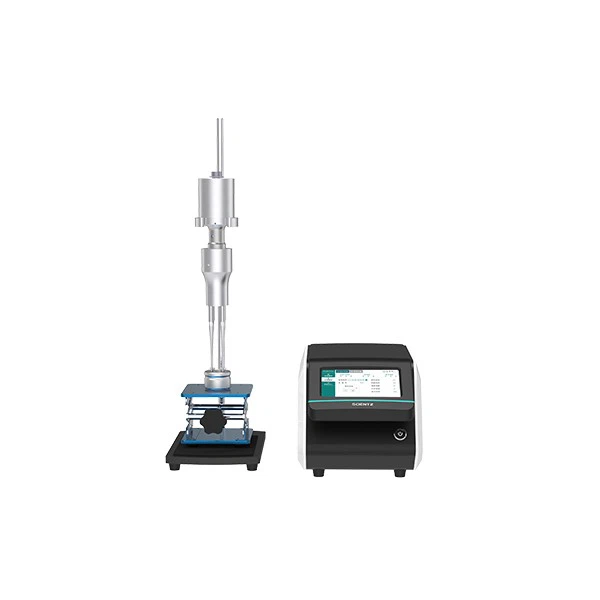
Ultrasonic homogenizers are another powerful tool for paint mixing. These devices use high - frequency ultrasonic waves to generate cavitation bubbles in the liquid. When the bubbles collapse, they create intense shear forces that can break down particles and disperse them evenly. Ultrasonic homogenizers are particularly effective for nano - scale pigment dispersion. For example, our Newest Cup Form Industrial Nano Material Homogenizer is designed to handle small - volume samples with high precision, making it ideal for paint research and development in the lab.
Factors to Consider When Using a Lab Mixer for Paint Mixing
Viscosity
As mentioned earlier, paint viscosity plays a crucial role in determining the appropriate lab mixer. High - viscosity paints require a mixer with sufficient power and shear force to achieve proper mixing. Overhead stirrers with large impellers or ultrasonic homogenizers are often better suited for high - viscosity paints, while magnetic stirrers are more appropriate for low - viscosity paints.
Pigment Type and Loading
Different pigments have different properties, such as particle size, density, and surface chemistry. Some pigments may be more difficult to disperse than others. High - pigment loading can also make the mixing process more challenging. Ultrasonic homogenizers are highly effective for dispersing small - particle - size pigments, such as nano - pigments. Our Scientz - IID New Type Of Ultrasonic Homogenizer With 7 TFT Touch Display is equipped with advanced features for precise control of the ultrasonic output, which can be adjusted according to the pigment type and loading.
Mixing Time and Speed
The mixing time and speed are also important factors. Mixing for too short a time may result in incomplete mixing, while mixing for too long or at too high a speed can cause over - heating, which may affect the properties of the paint. It is essential to find the optimal mixing time and speed for each specific paint formulation.
Temperature Control
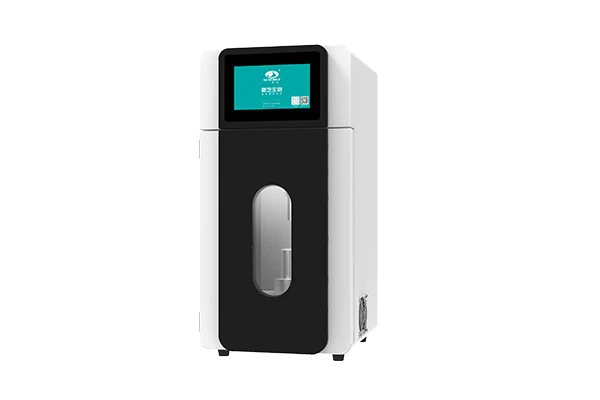
During the mixing process, heat is generated, especially when using high - power mixers such as ultrasonic homogenizers. High temperatures can cause the solvents in the paint to evaporate, change the viscosity of the paint, or even degrade the paint components. Therefore, temperature control is crucial for maintaining the quality of the paint. Some of our lab mixers, like the SCIENTZ - 650L Integrated Ultrasonic Homogenizers, are equipped with temperature - control features to ensure stable mixing conditions.
Advantages of Using a Lab Mixer for Paint Mixing
Using a lab mixer for paint mixing in a lab offers several advantages. Firstly, it allows for precise control of the mixing process. Researchers can adjust parameters such as mixing speed, time, and temperature to achieve the desired paint properties. This is especially important for developing new paint formulations or improving existing ones.
Secondly, lab mixers are designed to handle small - volume samples. This is beneficial for initial research and development, where only a small amount of paint is needed to test different formulations. It also reduces waste and cost.
Thirdly, lab mixers can provide consistent and repeatable results. This is crucial for quality control and ensuring that the properties of the paint are consistent from batch to batch.
Our Product Range for Paint Mixing
In addition to the products mentioned above, we also offer a Multi - proble Ultrasonicator that can be used for simultaneous processing of multiple samples, which is very efficient for large - scale paint research. Our Ultrasonic Processor is a versatile device that can be used for a wide range of applications, including paint mixing, with adjustable power and frequency settings.
Conclusion
In conclusion, a lab mixer can indeed be used for mixing paints in a lab. The key is to choose the right type of lab mixer based on the specific requirements of the paint, such as viscosity, pigment type, and loading. Our wide range of lab mixers, including magnetic stirrers, overhead stirrers, and ultrasonic homogenizers, offers solutions for different paint - mixing needs. Whether you are a researcher in a paint laboratory or a paint manufacturer looking to improve your production process, our lab mixers can help you achieve high - quality and consistent paint mixing results.
If you are interested in our lab mixers for your paint - mixing applications, please feel free to contact us for more information and to discuss your specific requirements. We are committed to providing you with the best products and services to meet your needs.
References
- Paint and Coating Testing Manual: Fourteenth Edition of the Gardner - Sward Handbook. Wicks, Z. W., Jones, F. N., Pappas, S. P., & Wicks, D. A. (Eds.). ASTM International.
- Principles of Polymerization. Odian, G. (2004). Wiley - Interscience.
- Ultrasonics in Food Processing. Mason, T. J., Povey, M. J. W., & Berlan, J. (Eds.). Ellis Horwood.