

What is the particle size distribution after homogenization?
Jan 06, 2026
Leave a message
What is the particle size distribution after homogenization?
Homogenization is a crucial process in various industries, including food, pharmaceuticals, cosmetics, and biotechnology. It involves reducing the size of particles in a sample and distributing them uniformly throughout the medium. Understanding the particle size distribution after homogenization is essential as it can significantly influence the product's quality, stability, and performance.
The Basics of Homogenization
Homogenization typically works by forcing a liquid or semi - liquid sample through a narrow gap orifice at high pressure. This action causes intense shear forces, collisions, and cavitation effects, which break down the large particles into smaller ones. In the case of ultrasonic homogenization, high - frequency sound waves are used to generate cavitation bubbles in the liquid. When these bubbles collapse, they produce shockwaves that disrupt the particles.
Importance of Particle Size Distribution
- Product Stability: A narrow particle size distribution can improve the stability of emulsions and suspensions. For example, in the food industry, a uniform distribution of fat globules in milk after homogenization prevents creaming and improves the shelf - life of the product. In pharmaceuticals, a consistent particle size in drugs can enhance their stability and bioavailability.
- Texture and Appearance: The particle size affects the texture and appearance of products. In cosmetics, a fine and uniform particle size can result in a smooth and luxurious feel, while in the paint industry, it can improve the gloss and color consistency of the paint.
- Reactivity: In chemical and biological processes, smaller particle sizes generally lead to increased reactivity due to the larger surface area exposed. This can be beneficial in catalysis and the extraction of active ingredients.
Factors Affecting Particle Size Distribution after Homogenization
- Homogenization Pressure: Higher pressures usually result in smaller particle sizes and a narrower size distribution. However, there is a limit to how much the pressure can be increased, as excessive pressure may lead to equipment damage or unwanted changes in the product properties.
- Number of Passes: Multiple passes through the homogenizer can further reduce the particle size and improve the uniformity of the distribution. Each additional pass can break down the remaining larger particles and refine the size distribution.
- Initial Particle Size and Concentration: Samples with larger initial particle sizes or higher concentrations may require more intense homogenization conditions to achieve the desired particle size distribution. For instance, a suspension with a high solid content may need multiple passes at higher pressures.
- Temperature: Temperature can affect the viscosity of the sample and the intensity of cavitation during ultrasonic homogenization. A higher temperature generally reduces the viscosity, which can facilitate the homogenization process. However, excessive temperature may also cause degradation of thermally - sensitive components.
Measuring Particle Size Distribution
There are several methods available for measuring particle size distribution after homogenization.
- Laser Diffraction: This is a widely used method that measures the angle of light scattered by particles in suspension. The data obtained are used to calculate the particle size distribution based on the Mie theory. It can measure a wide range of particle sizes quickly and accurately.
- Dynamic Light Scattering: This method measures the Brownian motion of particles in a liquid. By analyzing the fluctuations in the scattered light intensity, the hydrodynamic diameter of the particles can be determined. It is suitable for measuring small particles in the nanometer range.
- Microscopy: Optical microscopy and electron microscopy can provide direct visualization of the particles. This allows for detailed analysis of the particle shape and size, but it is a more time - consuming and labor - intensive method.
Our Homogenizers and Their Impact on Particle Size Distribution
As a homogenizer supplier, we offer a range of high - quality homogenizers that are designed to achieve the best particle size distribution for different applications.
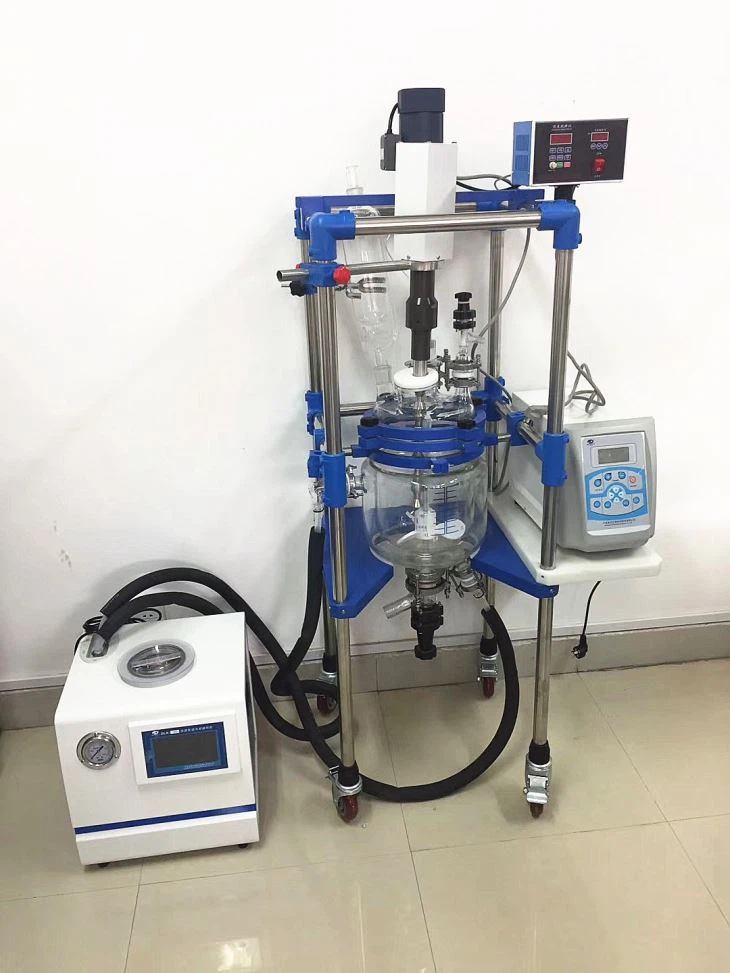

- SCIENTZ - 1200E Probe Sonicator for Cell Lysis, Tissue Disruption and Homogenization, Ultrasonic Liquid Processor for Pilot Use: This probe sonicator is ideal for cell lysis, tissue disruption, and pilot - scale homogenization. It uses high - frequency ultrasonic waves to generate intense cavitation, which can effectively break down cells and particles. With its adjustable power and pulse settings, it can be customized to achieve the desired particle size distribution for different samples.
- JY88 - IIN Ultrasonic Homogenizer: Our JY88 - IIN ultrasonic homogenizer is a reliable and efficient tool for various homogenization tasks. It has a user - friendly interface and advanced control features, allowing for precise adjustment of the homogenization parameters. The homogenizer can produce a narrow particle size distribution, ensuring the quality and stability of the final product.
- High Quality Ultrasonic Cannabis Extraction Machine: In the cannabis extraction industry, our ultrasonic machine is designed to extract active ingredients efficiently while maintaining a proper particle size distribution. The ultrasonic cavitation helps to break down the plant material, releasing the desired compounds into the solvent. The resulting extract has a uniform particle size, which is beneficial for further processing and formulation.
Conclusion
In conclusion, understanding the particle size distribution after homogenization is vital for ensuring the quality and performance of various products. Our homogenizers are engineered to provide consistent and reliable results, helping you achieve the optimal particle size distribution for your specific applications. Whether you are in the food, pharmaceutical, cosmetic, or biotechnology industry, our range of homogenizers can meet your needs.
If you are interested in learning more about our homogenizers or wish to discuss your specific requirements, please feel free to reach out to us. Our team of experts is ready to assist you in choosing the right homogenization solution for your business.
References
- McClements, D. J. (2015). Food Emulsions: Principles, Practices, and Techniques. CRC Press.
- Saito, K., & Oda, R. (2012). Particle size reduction and homogenization of droplets in a microchannel. Chemical Engineering Science, 78, 1 - 8.
- Williams, P. A., & Philips, G. O. (2009). Handbook of Hydrocolloids. CRC Press.