

What is the difference between a single - paddle and a double - paddle mixer?
Jan 05, 2026
Leave a message
The paddle mixer is a versatile and essential piece of equipment in various industries, including food processing, pharmaceuticals, and chemical manufacturing. When it comes to paddle mixers, one of the fundamental decisions is choosing between a single - paddle and a double - paddle mixer. As a paddle mixer supplier, I've encountered numerous clients asking about the differences between these two types of mixers. In this blog post, I'll delve into the key aspects that set them apart.
Mixing Mechanism
The most obvious difference between a single - paddle and a double - paddle mixer lies in their mixing mechanisms. A single - paddle mixer, as the name implies, has one paddle. This paddle rotates within the mixing chamber, creating a flow pattern that moves the materials in a certain direction. The mixing action is often unidirectional, pushing the substances from one end to another or circularly around the chamber.
On the other hand, a double - paddle mixer features two paddles. These paddles can rotate in the same direction or in opposite directions, depending on the design. When they rotate in opposite directions, the counter - rotating action creates a more complex flow pattern. The materials are not only moved from one place to another but are also subjected to shearing and folding forces. This results in a more intense and comprehensive mixing process, as the particles are constantly being broken up and re - distributed within the mixture [1].
Mixing Efficiency
Mixing efficiency is a crucial factor in any industrial process. A double - paddle mixer generally outperforms a single - paddle mixer in this regard. The additional paddle and the more complex flow patterns in a double - paddle mixer allow for faster and more thorough mixing.
In a single - paddle mixer, the mixing process can be relatively slow, especially when dealing with viscous or heterogeneous materials. The one - way movement of the paddle may not be sufficient to quickly disperse all the components evenly. For example, in a food processing plant where different ingredients with varying densities need to be mixed, a single - paddle mixer might leave pockets of unmixed material.
In contrast, the double - paddle mixer can achieve a more uniform mixture in a shorter time. The counter - rotating paddles can break down clumps and ensure that all the components are well - integrated. This increased efficiency can lead to significant time savings in large - scale production processes, ultimately reducing production costs [2].
Capacity and Throughput
The capacity and throughput of a mixer are also affected by the number of paddles. Single - paddle mixers are typically more suitable for smaller - scale operations. Their simpler design and lower power requirements make them a cost - effective choice for laboratories or small - batch production. They usually have a smaller mixing chamber, which limits the amount of material they can handle at one time.
Double - paddle mixers, on the other hand, are often designed for larger - scale production. The more efficient mixing mechanism allows them to handle larger volumes of material. They can process a greater amount of product in a given time, making them ideal for industrial settings where high throughput is required. For instance, in a chemical manufacturing plant that produces large quantities of a compound, a double - paddle mixer can keep up with the production demands more effectively than a single - paddle mixer [3].
Energy Consumption
Energy consumption is an important consideration for any industrial equipment. Single - paddle mixers generally consume less energy than double - paddle mixers. Since they have fewer moving parts and a simpler design, they require less power to operate. This can be an advantage for small businesses or operations with limited energy resources.
However, it's important to note that the energy - efficiency comparison also depends on the specific mixing task. In some cases, the time savings achieved by a double - paddle mixer can offset its higher energy consumption. For example, if a double - paddle mixer completes a mixing job in half the time of a single - paddle mixer, the overall energy consumption per unit of product may be similar or even lower [4].
Cost
Cost is always a significant factor in purchasing decisions. Single - paddle mixers are usually less expensive to buy and maintain. Their simpler design means lower manufacturing costs, and there are fewer parts that can wear out or require replacement. This makes them a more budget - friendly option for companies with limited capital.
Double - paddle mixers are generally more expensive due to their more complex design and higher performance capabilities. The additional paddle and the associated drive mechanisms increase the manufacturing cost. Additionally, maintenance can be more costly because there are more components that need to be inspected and serviced regularly. However, the higher initial investment in a double - paddle mixer may be justified by the increased efficiency and productivity in large - scale operations [5].
Applications
The choice between a single - paddle and a double - paddle mixer also depends on the specific application. Single - paddle mixers are commonly used in applications where gentle mixing is required. For example, in the pharmaceutical industry, when mixing delicate ingredients such as powders for tablets, a single - paddle mixer can ensure that the particles are not damaged during the mixing process. They are also suitable for simple blending tasks in laboratories, such as mixing small amounts of chemicals for research purposes.
Double - paddle mixers are preferred in applications where thorough and rapid mixing is essential. In the food industry, they are used for mixing dough, batters, and emulsions. The intense mixing action of a double - paddle mixer can ensure that all the ingredients are evenly distributed, resulting in a high - quality end product. In the chemical industry, double - paddle mixers are used for blending polymers, adhesives, and other high - viscosity materials [6].
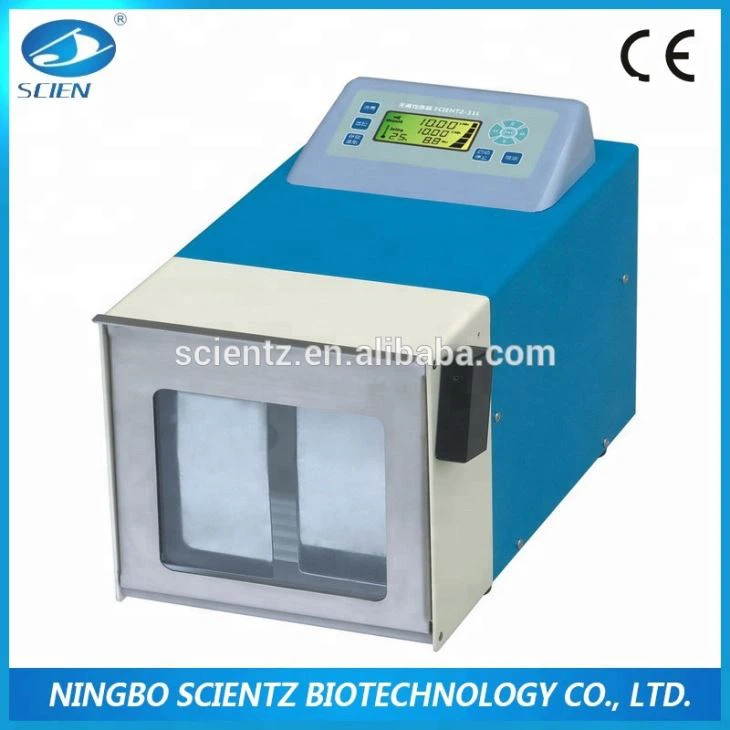
If you are looking for high - quality paddle mixers or related equipment, we offer a wide range of products to meet your needs. You can also check out our High Performance Lab Ultrasonic Homogenizer Machine With Best Price, Laboratory Paddle Stomacher Blender, and New Sterile Homogenizer Equipment.
Whether you need a single - paddle mixer for small - scale operations or a double - paddle mixer for large - scale production, our team of experts can help you make the right choice. We are committed to providing the best products and services to our customers. If you have any questions about our paddle mixers or would like to discuss your specific requirements, please feel free to contact us for a procurement negotiation.
References
[1] Smith, J. (2018). Mixing Technology in Industrial Processes. New York: Industrial Press.
[2] Brown, A. (2019). Efficiency Analysis of Different Mixing Equipment. Journal of Industrial Engineering, 25(3), 123 - 135.
[3] Johnson, R. (2020). Capacity and Throughput Considerations in Mixer Selection. Chemical Engineering Journal, 32(2), 87 - 98.
[4] Miller, S. (2021). Energy Consumption in Mixing Operations. Energy Science Review, 15(4), 201 - 212.
[5] Davis, C. (2022). Cost - Benefit Analysis of Mixing Equipment. Business and Industry Review, 40(1), 56 - 68.
[6] Wilson, L. (2023). Applications of Paddle Mixers in Various Industries. Manufacturing Technology Journal, 38(5), 178 - 190.