

What are the advantages of using a homogenizer in food production?
Aug 17, 2026
Leave a message
Hey there, foodies and food producers! Today, I'm here to chat about one of the unsung heroes in the food production industry: the homogenizer. As a homogenizer supplier, I've seen firsthand how these nifty machines can revolutionize the way you make food. So, let's dive right in and explore the advantages of using a homogenizer in food production.
1. Improved Product Consistency
One of the biggest perks of using a homogenizer is that it helps you achieve a consistent product every single time. When you're making food products like milk, yogurt, or salad dressings, you want each batch to look, taste, and feel the same. A homogenizer breaks down the fat globules in the product, making them smaller and more evenly distributed throughout the mixture. This results in a smoother, creamier texture and a more uniform appearance.
For example, in the dairy industry, homogenization prevents the cream from rising to the top of the milk, giving it a consistent taste and texture from the first sip to the last. This is especially important for commercial dairy products, where consumers expect a certain level of quality and consistency.
2. Enhanced Shelf Life
Another great advantage of using a homogenizer is that it can extend the shelf life of your food products. By breaking down the fat globules and preventing them from clumping together, a homogenizer reduces the surface area of the fat, which in turn slows down the process of oxidation. Oxidation is what causes food to spoil, so by reducing it, you can keep your products fresh for longer.
In addition, homogenization can also help to prevent the growth of bacteria and other microorganisms in your food products. The smaller fat globules created by the homogenizer are less likely to provide a suitable environment for bacteria to grow, which can help to keep your products safe and fresh for a longer period of time.
3. Better Nutritional Value
Did you know that using a homogenizer can actually improve the nutritional value of your food products? When you homogenize dairy products like milk, you make the fat more easily digestible, which means that your body can absorb more of the nutrients in the milk. This is especially important for people who have trouble digesting fat, such as infants and the elderly.
In addition, homogenization can also help to preserve the vitamins and minerals in your food products. By preventing the oxidation of these nutrients, a homogenizer can help to ensure that they remain intact and available for your body to absorb.
4. Increased Productivity
As a food producer, you're always looking for ways to increase your productivity and efficiency. A homogenizer can help you do just that. By using a homogenizer, you can process your food products more quickly and easily, which can help you to meet the demands of your customers.
For example, if you're making ice cream, a homogenizer can help you to mix the ingredients more thoroughly and quickly, which can reduce the amount of time it takes to make a batch of ice cream. This can help you to increase your production capacity and meet the demands of your customers more effectively.
5. Versatility
Homogenizers are incredibly versatile machines that can be used in a wide variety of food production applications. Whether you're making dairy products, beverages, sauces, or other food products, a homogenizer can help you to achieve the perfect texture and consistency.
For example, if you're making a salad dressing, a homogenizer can help you to emulsify the oil and vinegar, creating a smooth, creamy texture. If you're making a fruit juice, a homogenizer can help you to break down the pulp and fibers, creating a smoother, more consistent juice.
6. Cost-Effective
Finally, using a homogenizer can actually be cost-effective in the long run. While the initial investment in a homogenizer may be relatively high, the benefits of using a homogenizer can more than offset the cost.
For example, by improving the shelf life of your food products, you can reduce the amount of waste that you produce, which can save you money in the long run. In addition, by increasing your productivity and efficiency, you can produce more products in less time, which can help you to increase your revenue and profitability.
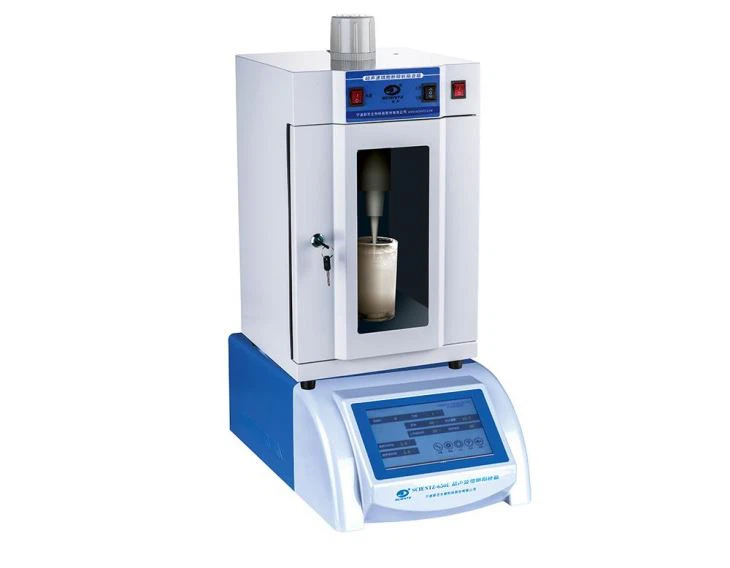
So, there you have it! These are just some of the many advantages of using a homogenizer in food production. As a homogenizer supplier, I can help you find the right homogenizer for your specific needs and budget. Whether you're looking for a High Quality Ultrasonic Cannabis Extraction Machine, a Touch Screen Ultrasonic Probe Sonicator, an Ultrasonic Cell Crusher Integrated SCIENTZ-1000J, an Ultrasonic Homogenizer For Sale, or a Laboratory Power Adjustable Nano Probe Sonicator, I've got you covered.
If you're interested in learning more about our homogenizers or if you have any questions about how to use a homogenizer in your food production process, please don't hesitate to reach out. I'd be happy to chat with you and help you find the right solution for your business.
References
- Fennema, O. R. (1996). Food Chemistry (3rd ed.). Marcel Dekker.
- Heldman, D. R., & Singh, R. P. (1981). Food Process Engineering. AVI Publishing Company.
- Lewis, M. J., & Heppell, N. J. (2000). Food Process Engineering and Technology. Pearson Education.