

What is the function of a homogenizer?
Dec 26, 2025
Leave a message
Yo! As a homogenizer supplier, I often get asked, "What the heck is the function of a homogenizer?" Well, let me break it down for you in simple terms.
First off, a homogenizer is like a magic mixer on steroids. Its main job is to make a mixture super uniform. You know when you have two or more substances that just don't seem to mix well? Maybe you've got oil and water, and no matter how much you shake it, they keep separating. That's where a homogenizer steps in.
In the food industry, homogenizers are absolute MVPs. Think about milk. Raw milk has this layer of cream that rises to the top. It looks kind of cool, but it's not the most convenient for consumers. That's why most of the milk you buy in the grocery store has been homogenized. The homogenizer forces the milk through tiny holes at super high pressure. This breaks up the fat globules in the milk so they're evenly distributed throughout the liquid. As a result, the milk stays creamy and consistent from the first sip to the last. No more having to shake the carton every time you pour a glass!
The cosmetic industry also relies heavily on homogenizers. Cosmetics are made up of all sorts of ingredients like oils, waxes, water, and various chemicals. If these ingredients aren't mixed properly, the product can look and feel lumpy, or the different parts might separate over time. A homogenizer ensures that all these components are blended together smoothly, creating a product that's not only visually appealing but also has a consistent texture. Whether it's a lotion, a cream, or a makeup product, the homogenizer helps give it that professional - grade finish.
In the pharmaceutical field, the function of a homogenizer is crucial for drug development and production. Many drugs are in the form of emulsions or suspensions, which means they have small particles of one substance dispersed in another. For these drugs to be effective, the particles need to be of a consistent size and evenly distributed. A homogenizer can achieve this by breaking down large particles into smaller ones and ensuring they're uniformly spread throughout the liquid. This is important because it affects how the drug is absorbed by the body. If the particles are too big or unevenly distributed, the drug might not work as well.
Now, let's talk about the different types of homogenizers. One popular type is the Ultra Turrax. The Ultra Turrax uses a high - speed rotor - stator system. The rotor spins really fast, creating a strong suction that pulls in the substances to be mixed. Then, as the mixture passes through the narrow gap between the rotor and the stator, it gets subjected to intense shearing forces. These forces break down any clumps or large particles and mix the substances together thoroughly. It's a great option for labs and small - scale production because it's relatively easy to operate and can handle a wide range of viscosities.
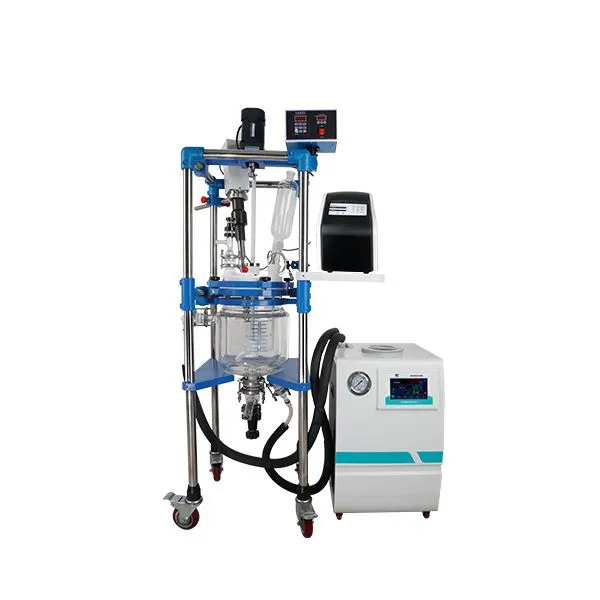
Another cool product in our lineup is the Scientz - T Series Ultrasonic Extraction Machine. This machine uses ultrasonic waves to homogenize substances. Ultrasonic waves create tiny bubbles in the liquid through a process called cavitation. When these bubbles collapse, they release a huge amount of energy, which can break down cell walls, mix substances, and extract valuable components. It's especially useful in the extraction of natural products like herbs and plants. You can use it to get essential oils, bioactive compounds, and other useful substances from plant materials in a more efficient way.
We also have Ultrasonic Extraction Equipment. This equipment is designed for larger - scale production. It can handle a large volume of samples at once, making it perfect for industrial applications. Whether you're in the food, cosmetic, or pharmaceutical industry, this ultrasonic extraction equipment can help you streamline your production process and get high - quality, uniform products.

One of the other great things about homogenizers is that they can improve the stability of a mixture. When substances are homogenized, the particles are more evenly distributed, which means there's less chance of them settling or separating. This is super important for products that need to have a long shelf - life. For example, in the paint industry, a homogenizer is used to mix pigments, binders, and solvents. A well - homogenized paint will stay consistent over time, resist settling, and provide a smooth finish when applied.
Homogenizers can also enhance the taste and smell of products. In the food and beverage industry, when flavors and ingredients are homogenized properly, they blend together more harmoniously. This can lead to a more balanced and enjoyable taste. In the aroma industry, homogenizers help to disperse essential oils evenly in a carrier, ensuring that the scent is consistent and long - lasting.
If you're in an industry that requires mixing, blending, or extracting substances, a homogenizer is a must - have tool. It can save you time and money by improving the quality of your products and streamlining your production process. Whether you're a small - scale lab or a large - scale industrial manufacturer, we've got the right homogenizer for you.
If you're interested in learning more about our homogenizers or want to discuss your specific needs, don't hesitate to reach out. We're here to help you find the perfect solution for your business. Let's have a chat and see how we can take your production to the next level!
References
- "Food Emulsions: Principles, Practice, and Techniques" by D. Julian McClements
- "Cosmetic Science and Technology" by Harry's Cosmeticology
- "Pharmaceutical Dosage Forms: Disperse Systems" edited by Kenneth J. Florence