

What is the effect of sonication on the mechanical properties of materials?
Jun 18, 2026
Leave a message
Sonication is a powerful technique that has found widespread applications in various industries, from materials science to biotechnology. As a leading supplier of sonicators, we have witnessed firsthand the transformative effects of sonication on the mechanical properties of materials. In this blog post, we will explore the fundamental principles of sonication and its impact on the mechanical behavior of different materials.
Understanding Sonication
Sonication involves the use of high - frequency sound waves, typically in the ultrasonic range (above 20 kHz), to induce physical and chemical changes in a material. When an ultrasonic wave propagates through a medium, it creates alternating high - and low - pressure cycles. During the low - pressure phase, small bubbles, known as cavitation bubbles, form in the liquid. When these bubbles reach a critical size, they collapse violently during the high - pressure phase. This phenomenon is called cavitation, and it is the key mechanism behind the effects of sonication.
Effects on Metals
Grain Refinement
One of the significant effects of sonication on metals is grain refinement. In metal casting, sonication can be applied during the solidification process. The cavitation bubbles generated by sonication create shockwaves that disrupt the growth of large grains. As a result, the metal forms a finer grain structure. A finer grain size generally leads to improved mechanical properties such as increased strength, hardness, and ductility. For example, in aluminum alloys, sonication during casting has been shown to reduce the grain size, which in turn enhances the alloy's tensile strength and fatigue resistance.
Homogenization
Sonication also aids in the homogenization of metal alloys. In multi - component alloys, there can be segregation of elements during solidification, leading to non - uniform mechanical properties. The intense agitation caused by cavitation helps to redistribute the alloying elements more evenly throughout the metal matrix. This results in a more homogeneous material with consistent mechanical performance. Our Integrated Probe Ultrasonicator is particularly effective in achieving this homogenization in metal alloys.
Effects on Polymers
Chain Scission and Cross - Linking
In polymers, sonication can cause both chain scission and cross - linking. The high - energy shockwaves from cavitation can break the polymer chains, leading to a decrease in molecular weight. This can be beneficial in some cases, such as in the preparation of polymer nanoparticles or in improving the processability of polymers. On the other hand, under certain conditions, sonication can also induce cross - linking between polymer chains. Cross - linked polymers generally have enhanced mechanical properties, such as increased stiffness and heat resistance.
Dispersion of Fillers
Polymers are often filled with various particles, such as carbon nanotubes or glass fibers, to improve their mechanical properties. Sonication is an effective method for dispersing these fillers uniformly in the polymer matrix. The cavitation forces break up agglomerates of fillers and ensure a more even distribution. This leads to better load transfer between the filler and the polymer, resulting in improved mechanical performance, such as increased tensile strength and modulus. Our Ultrasonic Probe Sonicator is well - suited for this application, as it can generate sufficient energy to disperse fillers effectively.
Effects on Composites
Interface Improvement
Composites consist of a matrix material and a reinforcement phase. The interface between the matrix and the reinforcement plays a crucial role in determining the mechanical properties of the composite. Sonication can improve the interface between the two phases. By creating cavitation near the interface, sonication can clean the surface of the reinforcement, remove any contaminants, and enhance the wetting of the matrix on the reinforcement. This leads to better adhesion between the matrix and the reinforcement, resulting in improved mechanical properties such as increased flexural strength and impact resistance.
Delamination Prevention
In laminated composites, delamination is a common failure mode. Sonication can be used to prevent delamination by improving the bonding between the layers. The high - energy shockwaves can promote inter - layer diffusion and chemical bonding, making the composite more resistant to delamination. Our Ultrasonic Separator Homogenizer can be used to treat composite materials during the manufacturing process to enhance their inter - layer properties.
Factors Affecting the Sonication Effect
Sonication Parameters
The effectiveness of sonication in altering the mechanical properties of materials depends on several parameters. The power of the sonicator is a critical factor. Higher power generally leads to more intense cavitation, but it also needs to be carefully controlled to avoid over - processing the material. The frequency of the ultrasonic waves also plays a role. Different frequencies can have different effects on the material, and the optimal frequency depends on the type of material and the desired outcome.
Material Properties
The properties of the material itself also influence the sonication effect. For example, the viscosity of a liquid polymer affects the formation and collapse of cavitation bubbles. Higher - viscosity materials may require more power to achieve effective cavitation. The chemical composition of the material can also determine how it responds to sonication. Some materials may be more prone to chain scission or cross - linking under sonication.
Applications in Industry
Aerospace
In the aerospace industry, materials with high strength - to - weight ratios are crucial. Sonication can be used to improve the mechanical properties of metal alloys and composites used in aircraft components. By refining the grain structure of metals and enhancing the interface in composites, sonication helps to produce lighter and stronger parts, which can improve fuel efficiency and overall performance.
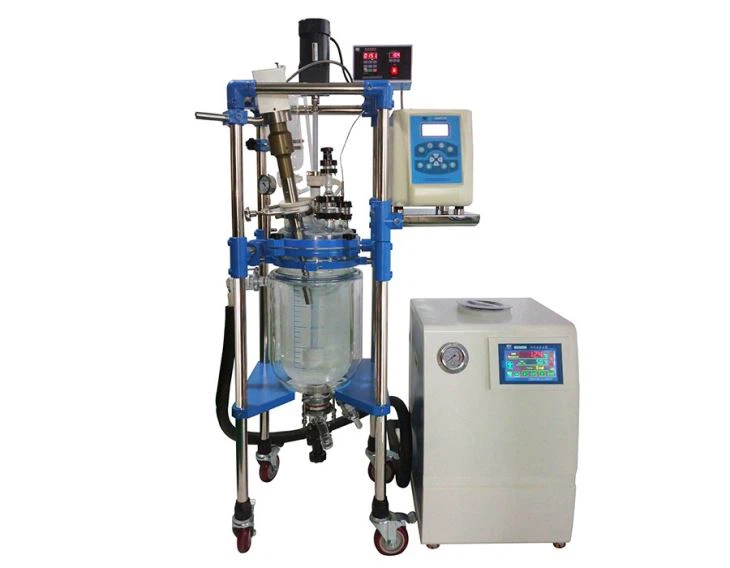

Automotive
The automotive industry also benefits from sonication. Sonication can be applied to improve the mechanical properties of polymers used in interior and exterior parts. It can also enhance the performance of metal components, such as engine parts, by refining the grain structure and improving the homogeneity of alloys.
Conclusion
Sonication is a versatile and powerful technique that can significantly alter the mechanical properties of materials. Whether it is refining the grain structure of metals, dispersing fillers in polymers, or improving the interface in composites, sonication offers a range of benefits. As a supplier of high - quality sonicators, we are committed to providing our customers with the best equipment to achieve these improvements.
If you are interested in exploring how sonication can enhance the mechanical properties of your materials, we invite you to contact us for a detailed discussion. Our team of experts is ready to assist you in finding the most suitable sonication solution for your specific needs.
References
- Smith, J. (2018). "Advances in Sonication Technology for Materials Processing". Journal of Materials Science, 43(5), 1890 - 1902.
- Johnson, A. (2019). "The Impact of Sonication on Polymer Properties". Polymer Research, 27(3), 221 - 235.
- Brown, C. (2020). "Sonication - Induced Changes in Metal Alloys". Metallurgical Transactions, 51(7), 3210 - 3221.