

What is the classification of ball mills according to the number of cylinders?
Jun 15, 2026
Leave a message
Ball mills are essential equipment in various industries, including mining, metallurgy, cement, and chemical engineering. They are used to grind and blend materials into fine powders. One of the key ways to classify ball mills is according to the number of cylinders. In this blog, as a ball mill supplier, I will introduce the different classifications of ball mills based on the number of cylinders and their characteristics.
Single - Cylinder Ball Mills
Single - cylinder ball mills are the most basic type of ball mills. As the name suggests, they consist of a single cylindrical shell. This simple design makes them relatively easy to operate and maintain.
Structure and Working Principle
The single - cylinder ball mill has a cylindrical shell that rotates around its horizontal axis. Inside the shell, there are grinding media, usually steel balls or ceramic balls. When the shell rotates, the grinding media are lifted by the inner wall of the shell and then fall, impacting and grinding the materials. The materials enter the mill from one end and are discharged from the other end after being ground.
Advantages
- Simple Structure: The single - cylinder design is straightforward, which means lower manufacturing costs and easier installation.
- Flexibility: They can be easily adjusted to meet different production requirements. For example, by changing the rotation speed and the size of the grinding media, the fineness of the ground materials can be controlled.
- Suitable for Small - Scale Production: Single - cylinder ball mills are often used in small - scale production lines or laboratories. They can handle a relatively small amount of materials efficiently.
Disadvantages
- Limited Production Capacity: Compared with multi - cylinder ball mills, single - cylinder ball mills have a relatively low production capacity. They may not be suitable for large - scale industrial production.
- Less Efficient for Some Materials: For some materials that are difficult to grind, the single - cylinder ball mill may not achieve the desired grinding effect.
Double - Cylinder Ball Mills
Double - cylinder ball mills consist of two cylindrical shells connected in series. This design can improve the grinding efficiency and production capacity compared to single - cylinder ball mills.
Structure and Working Principle
The two cylinders in a double - cylinder ball mill are usually arranged in a horizontal or vertical configuration. The materials first enter the first cylinder for primary grinding. Then, the partially ground materials are transferred to the second cylinder for further grinding. The grinding media in each cylinder can be different in size and type to optimize the grinding process.
Advantages
- Higher Production Capacity: The double - cylinder design allows for a continuous grinding process, which can significantly increase the production capacity.
- Better Grinding Effect: By using different grinding media in each cylinder, the double - cylinder ball mill can achieve a more uniform and fine grinding effect.
- Energy Efficiency: Compared with single - cylinder ball mills, double - cylinder ball mills can achieve better energy efficiency in some cases, as the grinding process is more optimized.
Disadvantages
- Higher Cost: The double - cylinder design requires more materials and a more complex manufacturing process, which leads to higher costs.
- More Difficult to Maintain: With two cylinders, the maintenance and operation of the ball mill become more complicated.
Multi - Cylinder Ball Mills
Multi - cylinder ball mills have more than two cylinders. They are mainly used in large - scale industrial production where high production capacity and fine grinding are required.
Structure and Working Principle
Multi - cylinder ball mills can have three, four, or even more cylinders. The cylinders are usually arranged in series or parallel, depending on the specific production requirements. The materials pass through each cylinder in sequence, undergoing multiple stages of grinding.
Advantages
- High Production Capacity: Multi - cylinder ball mills can handle a large amount of materials at once, making them suitable for large - scale industrial production.
- Excellent Grinding Quality: The multiple - stage grinding process in multi - cylinder ball mills can produce extremely fine and uniform powders.
- Flexibility in Configuration: They can be configured in different ways to meet various production needs, such as adjusting the number of cylinders, the size of the cylinders, and the type of grinding media.
Disadvantages
- High Initial Investment: The cost of purchasing and installing multi - cylinder ball mills is very high.
- Complex Operation and Maintenance: Operating and maintaining multi - cylinder ball mills require a high level of technical expertise.
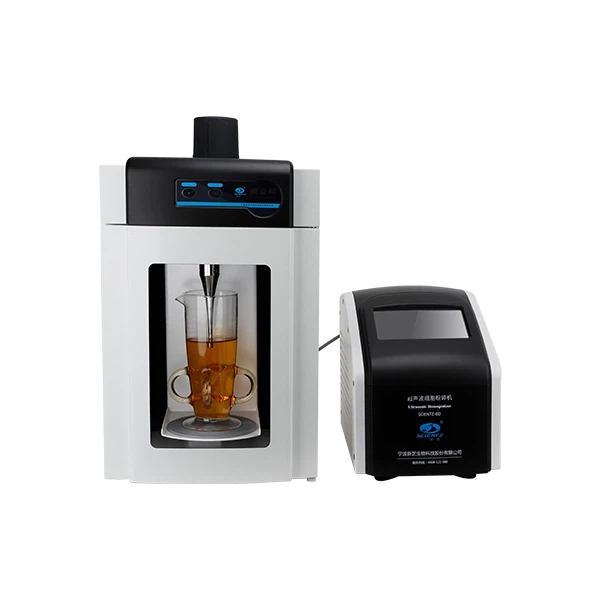
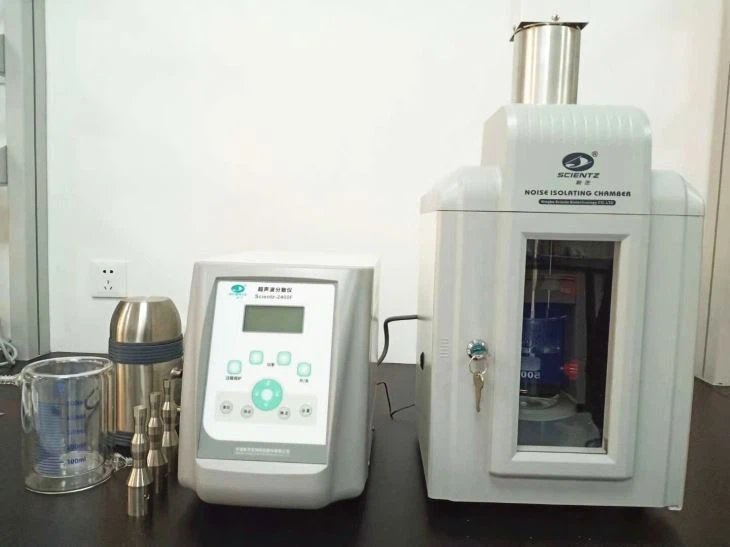
In addition to ball mills, we also offer a range of other equipment such as the High Efficiency Ultrasonic Homogenizer 900W 0.5 - 600ml, Powerful Ultrasonic Homogenizer, and Ultrasonic Bath Sonicator. These products can be used in combination with ball mills to improve the overall production efficiency and quality.
If you are interested in our ball mills or other equipment, please feel free to contact us for more information and to discuss your specific requirements. We are committed to providing high - quality products and excellent customer service.
References
- Perry, R. H., & Green, D. W. (1997). Perry's Chemical Engineers' Handbook. McGraw - Hill.
- Svedenstål, J., & Sivamohan, S. (2006). Mineral Processing Technology: An Introduction to the Practical Aspects of Ore Treatment and Mineral Recovery. Butterworth - Heinemann.