

What is the difference between a lab mixer and a regular mixer?
Dec 17, 2025
Leave a message
As a supplier of lab mixers, I often get asked about the difference between a lab mixer and a regular mixer. It's a fair question, especially if you're not familiar with the world of laboratory equipment. In this blog post, I'll break down the key differences and helps you understand why a lab mixer might be necessary for certain applications.
Precision and Consistency
One of the main differences between a lab mixer and a regular mixer is the level of precision and consistency. In a laboratory setting, experiments and research often require accurate and reproducible results. A lab mixer is designed to provide a high degree of control over mixing parameters such as speed, time, and temperature. This ensures that the samples are mixed uniformly every time, reducing the margin of error in the experiment.
On the other hand, a regular mixer, like the ones you might find in a kitchen or a construction site, is more focused on getting the job done quickly. They may not have the same level of precision when it comes to speed and mixing time. For example, a kitchen mixer might have a few speed settings, but it's not calibrated to specific RPM (revolutions per minute) like a lab mixer. This lack of precision can be a problem in scientific research where small variations can lead to significantly different results.
Cleanliness and Contamination Control
Another important aspect is cleanliness and contamination control. Laboratories deal with a wide range of substances, many of which are sensitive to contamination. A lab mixer is typically made from high-quality materials that are easy to clean and sterilize. This helps to prevent cross-contamination between different samples, which is crucial for accurate results.
Regular mixers, however, are not always designed with the same level of cleanliness in mind. Kitchen mixers, for instance, are used for food preparation and may not need to meet the stringent cleanliness standards required in a laboratory. They may have crevices or parts that are difficult to clean thoroughly, increasing the risk of contamination.
Customization and Specialized Functions
Lab mixers often come with a high degree of customization and specialized functions. Different experiments require different mixing techniques, and a lab mixer can be configured to meet these specific needs. For example, some lab mixers can be set to perform gentle mixing for delicate samples, while others can provide high-speed agitation for more viscous substances.

In contrast, regular mixers usually have a one-size-fits-all approach. They are designed for general-purpose mixing and may not offer the same level of flexibility. You might not be able to adjust the mixing speed as precisely or choose from a variety of mixing modes like you can with a lab mixer.
Durability and Longevity
Since lab mixers are used in professional settings, they are generally built to last. They are constructed from high-quality materials that can withstand continuous use and the rigors of a laboratory environment. This means that they are less likely to break down or malfunction, which is essential for maintaining the progress of experiments.
Regular mixers, especially those for home use, may not be as durable. They are often designed to be more affordable and may use cheaper materials, which can lead to a shorter lifespan. In a laboratory, where downtime can be costly and disrupt experiments, a reliable and long-lasting mixer is a must.
Examples of Lab Mixers
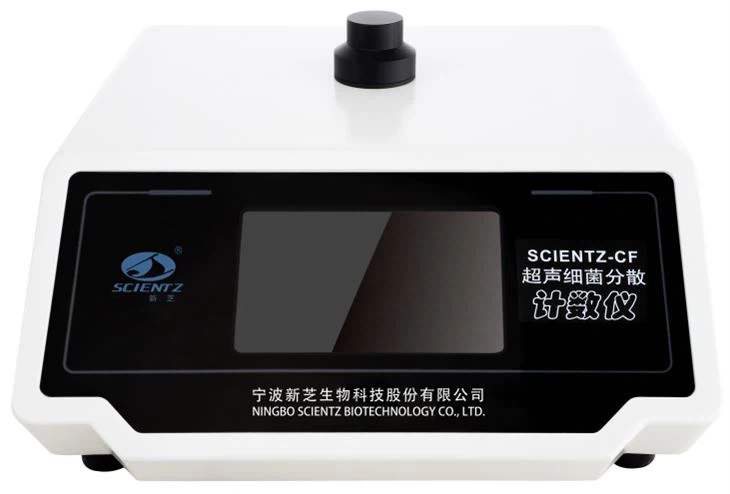
Let's take a look at some of the lab mixers we offer. The SCIENTZ - CF Ultrasonic Bacteria Dispersion Counter is a great example of a specialized lab mixer. It uses ultrasonic technology to disperse bacteria evenly, which is crucial for accurate counting and analysis. This type of precision is not achievable with a regular mixer.
The Lab Homogenizer is another popular option. It can be used to break down cells, homogenize tissues, and mix various substances. It offers a wide range of speed settings and can be customized according to the specific requirements of the experiment.
If you need a compact and efficient mixer, the Scientz98 - III Cup - Form Homogenizer is a good choice. It's designed for small - volume samples and provides a high - speed mixing solution.
When to Choose a Lab Mixer
So, when should you choose a lab mixer over a regular mixer? If you're conducting scientific research, quality control tests, or any other experiment that requires precision, consistency, and contamination control, a lab mixer is the way to go. Whether it's for a university laboratory, a pharmaceutical company, or a research institute, a lab mixer will provide the accuracy and reliability you need.
On the other hand, if you're just looking to mix ingredients for a home project, a recipe, or a simple construction task, a regular mixer will probably suffice. It's more affordable and easier to find, but it won't offer the same level of performance as a lab mixer.
Conclusion
In conclusion, the difference between a lab mixer and a regular mixer boils down to precision, cleanliness, customization, durability, and specialized functions. A lab mixer is designed to meet the strict requirements of scientific research and professional applications, while a regular mixer is more suitable for general - purpose use.
If you're in the market for a lab mixer, we're here to help. Our range of lab mixers offers the latest technology and the highest level of performance. Whether you need a mixer for basic mixing or a specialized application, we have the right solution for you. Don't hesitate to reach out for a consultation or to discuss your specific needs. We're committed to providing you with the best lab equipment to support your research and innovation.
References
- Principles of Laboratory Mixing, Smith, J. et al., 2020
- Comparison of Mixing Technologies in Research, Johnson, A., 2018
- The Importance of Precision in Laboratory Equipment, Brown, C., 2019