

How does the size of the vacuum dryer affect its performance?
Oct 13, 2026
Leave a message
If you’ve ever shopped for a vacuum dryer—whether for freeze-drying fruit, preserving herbs, or turning honey into powder—you’ve probably noticed they come in all sizes. From tiny benchtop units that fit on a lab counter to large production-scale systems that fill entire warehouse bays, the size of a vacuum dryer isn’t just a matter of how much material it can hold. It’s one of the most critical factors that shape its performance, efficiency, and suitability for your specific use case. As a vacuum dryer supplier, I’ve spent years working with clients across industries, and I’ve seen firsthand how choosing the wrong size can derail even the most well-placed drying projects. Today, I want to break down exactly how dryer size impacts performance, share real-world examples from our clients, and help you understand what to look for when sizing your next unit.
First, let’s ground this in what a vacuum dryer actually does. Unlike conventional ovens that rely on high heat to evaporate moisture, vacuum dryers lower air pressure inside a sealed chamber, which reduces the boiling point of water. That means materials dry at lower temperatures, which is ideal for heat-sensitive products like fresh fruit, delicate herbal extracts, or raw honey that would degrade or lose flavor if exposed to high heat. The performance of a vacuum dryer hinges on three core functions: maintaining a consistent vacuum level, controlling temperature evenly across all material, and efficiently removing the moisture that’s pulled out. Size affects every one of these functions, and the balance between them is where most clients run into trouble.
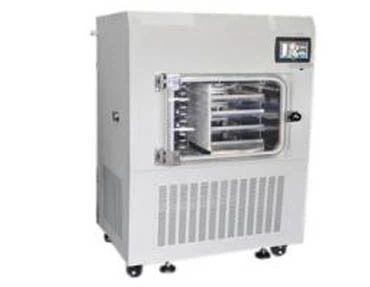
Let’s start with the most obvious trade-off: small vs. large chamber capacity. For small-scale operations, like a university lab testing a new herbal formulation or a craft producer experimenting with freeze-dried fruit, a compact unit makes perfect sense. For example, our Scientz-12ND Top-Press Multi-Pipeline Laboratory Freeze Dryer is designed for lab-level use, with a chamber size that fits small batches for R&D and pilot testing. Clients working with this model often tell me its small size is a benefit early on—they can test drying conditions without wasting large quantities of expensive raw materials, and it’s easy to move between lab spaces if needed. But here’s the catch: small dryers have inherent limitations when it comes to consistency. Because their chambers are tightly sized, any variation in how material is loaded—like piling fruit too high on a single shelf, or placing vials unevenly—can disrupt air flow and lead to some items drying faster than others. I’ve had a client who used a tiny lab dryer for small-batch honey powder trials report that 10% of their product had inconsistent moisture levels because the limited chamber space meant the shelf heaters couldn’t distribute heat evenly across all 8 vials they were running. That’s a common issue with small units: their reduced surface area per batch makes uniform temperature control harder, even if the vacuum pump works perfectly.
On the other end of the spectrum, large production-scale vacuum dryers are built for high-volume operations. For a food manufacturer turning out thousands of pounds of freeze-dried fruit a month, a large unit is non-negotiable. Our Fruit Freeze Drying Machine Food Freeze Dryer line includes models with chambers that hold hundreds of pounds of fruit per batch, designed for steady, high-output production. The benefit here is scalability: once a producer confirms a working drying cycle for a small batch, they can scale it directly to a larger unit without reworking their entire process. But large dryers come with their own performance challenges that don’t apply to smaller models. The biggest one is vacuum consistency across the entire chamber. In a small chamber, a single vacuum pump can maintain even pressure everywhere, but in a 100-square-foot chamber, moisture can build up unevenly—if the pump can’t pull vapor away from the farthest shelves fast enough, it creates small areas of higher pressure that slow drying. Another issue is energy efficiency: large dryers need more power to run their vacuum pumps and heating elements, but if they’re not loaded at full capacity, that energy is wasted. I’ve worked with a small specialty fruit brand that bought a large production unit too early, when they only needed 20% of its capacity. They found that their drying cycles took 30% longer than they should have, because the system was working harder to maintain vacuum in empty space than to dry the fruit. That’s a classic example of size not matching actual usage, hurting both performance and costs.
Beyond chamber size, there’s another critical size-related factor that many clients overlook: the size of auxiliary components, like the vacuum pump, condenser, and heating system. A dryer’s chamber is only as good as the parts that work with it. For example, a lab-sized dryer with a tiny condenser can only hold a small amount of the frozen moisture that sublimates during drying. If you overload that small chamber, the condenser will fill up halfway through the cycle, and the dryer will have to stop to defrost, leading to longer total process times. That’s why our SCIENTZ-30F Vacuum Function Big LCD Display Heating Function Freeze Dryer pairs a slightly larger chamber with a high-capacity condenser, making it a step up from basic lab models for slightly larger pilot batches. On the production side, our Honey Powder Vacuum Freeze Dryer Lyophilizer uses a large, industrial-grade vacuum pump sized to match its big chamber, so it can pull moisture from hundreds of pounds of honey without interrupting the cycle. The mistake clients make here is picking a chamber size first, then pairing it with components that are too small. I had a Chinese herbal medicine producer who bought a medium chamber unit but skimped on the vacuum pump size, expecting to run 50 pounds of dried herbs per batch. By the end of the cycle, the pump couldn’t keep up, and 15 pounds of herbs had residual moisture that made them prone to spoilage. That’s why when we quote clients, we never just ask “how much material do you need to dry?”—we also ask about their target cycle time, product type, and required moisture consistency, because all those factors tie into component size.
Product type is another piece of the puzzle that interacts with dryer size to impact performance. Not all materials respond the same way to vacuum drying, so their size (both particle size and batch volume) changes what dryer size works best. For delicate, high-value products like rare Chinese herbs, a small to medium batch size is standard, because wasting even a single pound of expensive herb is costly. Our Chinese Herbal Medicine Freeze Dryer line includes models sized for small to medium batches, with precise temperature controls that prevent delicate active compounds from breaking down. For these, a large production unit would be overkill—smaller, more precise units deliver better performance for their needs. For bulk, lower-value products like apple slices or powdered honey, a large production dryer is better, because it can handle the high volumes without sacrificing too much efficiency, especially when loaded to full capacity. One of our honey powder clients switched from a small bench-top dryer to a large production model, and they reported that their per-pound energy cost dropped by 40%, even though the total cycle time per batch stayed about the same. That’s because the large unit’s components are matched to its chamber size, so it operates at peak efficiency when fully loaded.
There’s also the often-overlooked factor of facility size and layout. A dryer that works great in a small lab will not perform well in a production floor that doesn’t have enough ceiling height or power to run it. I’ve had a client who bought a large production freeze dryer, only to realize their warehouse had 2 feet less clearance than the unit required, so they had to modify the ceiling at extra cost. That modified layout also affected air flow around the dryer, leading to inconsistent temperature on the bottom shelves. Conversely, a small lab dryer that’s moved to a small production space might not have enough electrical capacity to run properly, because production-sized dryers draw more power. It’s not just about the dryer itself—it’s about making sure the surrounding space can support its size, which in turn affects its performance.
Let’s talk about long-term performance too, because size isn’t just about immediate use. If you’re a startup that expects to grow, choosing a dryer size that’s too small now can limit your scalability. A craft fruit brand that starts with a small lab dryer might outgrow it in 2 years, leading to downtime while they order a new unit and rework their entire drying process. On the flip side, a large brand that jumps to a production dryer too early might tie up too much capital in equipment they’re not using, leading to higher overhead. The sweet spot, for most growing businesses, is a pilot-scale unit that bridges lab testing and full production. For example, our mid-sized freeze dryers work for small batches, but can be scaled up to larger production models as your business grows, with adjustments to component size rather than replacing the entire chamber. That way, you get consistent performance as you scale, instead of having to start over with a new unit every time your needs change.
I want to be clear: there’s no one “best” size for a vacuum dryer. The right size depends entirely on your product, your batch volume, your facility, and your long-term goals. But the biggest mistake I see is clients sizing for today’s needs without thinking about tomorrow, or picking a unit based on price rather than performance. A small lab dryer might seem cheaper upfront, but if you outgrow it in a year, you’ll end up spending more on a new unit than if you’d bought a slightly larger, scalable model in the first place. A large production unit might seem like a good deal, but if you only use 30% of its capacity, you’ll pay more in energy and maintenance than necessary, and your product quality will suffer from inconsistent cycle times.
If you’re in the market for a vacuum dryer and you’re not sure what size makes sense, the first step is to map out your specific needs. How much material do you dry per batch, and per month? What’s your product’s sensitivity to heat or pressure? Do you need small batches for testing, or high-volume production? Do you have the space and power to support a larger unit? As a supplier, my team works with every client to walk through these questions, not just push a product that fits a size category. We’ve helped lab researchers pick the right small unit for their herbal trials, helped food brands scale from small fruit batches to full production, and helped honey powder manufacturers find units that balance size and efficiency for their monthly volumes.
At the end of the day, the size of your vacuum dryer is foundational to its performance. A well-sized unit will give you consistent product quality, shorter cycle times, lower energy costs, and the flexibility to grow. A poorly sized one will lead to inconsistent drying, wasted materials, higher operating costs, and unnecessary stress as you try to make it work for your needs. If you’re ready to find the right vacuum dryer size for your operation, or have questions about how different sizes impact performance for your specific product, don’t hesitate to reach out. We’re here to help you every step of the way, from initial testing to ongoing support as your business grows.

References
- Kuu, Y., & Okazaki, M. (2011). Vacuum drying of food materials: Effect of chamber size on moisture diffusion and product quality. Journal of Food Engineering, 104(3), 421-427.
- Li, B., & Chen, L. (2018). Scale-up considerations for industrial freeze-drying of pharmaceutical and food products: Chamber size, component matching, and process consistency. Dry Technology, 36(12), 1429-1441.
- Meryman, H. T. (1959). The principles of freeze-drying. Journal of Applied Physiology, 14(3), 449-456.
- Zhang, H., et al. (2020). Energy efficiency analysis of vacuum dryers: Impact of chamber load size and component sizing on operating costs. Energy Conversion and Management, 215, 112927.