

What are the applications of sonicators in the food industry?
Nov 25, 2026
Leave a message
Hey everyone, and welcome back to the blog! Today I want to talk about a piece of equipment that's been quietly revolutionizing how we handle food production: sonicators. If you're in the food industry, you've probably heard whispers about ultrasonic tech, but let's cut through the jargon—sonicators use high-frequency sound waves to mix, extract, process, and stabilize food products in ways old-school methods just can't match. As a supplier of ultrasonic homogenizers and related gear, I see firsthand how businesses are tapping into this tech to save time, cut costs, and make better products. Let's dive into the key applications that are making sonicators a staple in food plants right now.
First up, extraction of active ingredients. You know how making things like plant-based extracts, essential oils, or even nutraceuticals used to mean boiling, soaking, or using harsh chemicals? Those methods often destroy delicate compounds or leave behind residues. Sonicators change that by creating cavitation—tiny bubbles that form and burst in liquid, generating heat and pressure that break down plant cell walls without extreme temps. That means you get more active ingredients (like antioxidants from berries or terpenes from hops) in less time, with no extra chemicals. For example, craft beverage makers use ultrasonic extraction to get more flavor out of hops for IPAs, or to process herbal teas that retain more of their natural benefits. If you're looking for a dedicated tool for this, our Ultrasonic Extraction Separator is built exactly for this—its design balances frequency and power to optimize extraction efficiency while keeping those valuable compounds intact. You can check it out here: Ultrasonic Extraction Separator. What's nice about this process, too, is it's scalable—from small batch test runs for artisanal brands to full industrial lines for big food manufacturers.
Next, homogenization and emulsification. Ever wonder how some salad dressings stay smooth forever, or how plant-based milks like oat or almond milk don't separate after sitting on the shelf? That's homogenization, and sonicators do it way better than traditional high-pressure methods. Old homogenizers force liquid through tiny nozzles, which can damage nutrients or create inconsistent textures. Sonicators mix two immiscible substances (like oil and water for dressings) by breaking droplets down to nanoscale sizes, creating a stable emulsion that doesn't need added stabilizers or preservatives. This is a game-changer for plant-based food producers, who are always looking to mimic the texture of dairy without artificial ingredients. Our Powerful Ultrasonic Homogenizer handles this heavy lifting—its high power output works for large volume batches, and it's easy to adjust settings depending on if you're making cream cheese, nut spreads, or even infant formula (which needs super fine emulsions for digestion). If you're just starting out and testing small batches, the SCIENTZ08 No Touch Ultrasonic Homogenizer is perfect for lab and pilot scale work—no manual touch needed, so it's clean, consistent, and great for product development. You can learn more about all our models and their uses on our Ultrasonic Homogenizer Application page, too, which breaks down real-world use cases for different food sectors.
Another big one: cutting food processing waste and improving product consistency. A lot of food production generates waste because of inconsistent particle sizes—like when you're processing fruits into purees, or vegetables into soups, and some chunks are too big or too small, so you have to throw them out. Sonicators can precisely control particle size during processing, so you get a uniform end product every time. For example, tomato sauce makers can use sonication to break down tomato skins and seeds fully, so the sauce is smooth without needing extra sieving steps. That cuts down on waste and saves time on labor-intensive processing. Similarly, in meat alternatives, sonicators help mix plant proteins with fats and binders evenly, so the final burger patty has the same texture and mouthfeel every single time—no more dry spots or crumbly edges. This consistency is huge for food brands, because customers expect the same product every time they buy it, and regulators often require strict quality standards, too.
Then there's microbial inactivation and food safety. We all know food safety is non-negotiable, and traditional pasteurization uses high heat which can ruin flavor and nutrients in foods like juices, milk, or even fresh produce. Ultrasonic sonication offers a non-thermal way to kill bacteria and pathogens—high-frequency sound waves disrupt bacterial cell membranes, making them unable to multiply, without heating the product. That means orange juice stays bright and fresh, milk retains its natural enzymes, and leafy greens don't get wilted from heat processing. This is especially useful for cold-pressed juices, which are marketed as "raw" and can't undergo high heat pasteurization. Sonicators help extend shelf life a little too, by reducing microbial load without compromising quality. I've worked with a few small juice brands that switched from traditional cold pressing plus chemical preservatives to sonication, and they told me their customer satisfaction went up because the juice tasted more like fresh fruit.
Wait, let's also talk about texture modification—think things like making chocolate smoother, or dough easier to work with. Chocolate conching is a long, laborious process where you mix cocoa solids, sugar, and fat for hours to get that silky texture. Sonication can speed up conching time drastically—some manufacturers cut conching from 24 hours to just a few hours using ultrasonic tech, because the sound waves break down sugar and cocoa particles evenly, so you get that smooth texture faster. For baked goods, sonicators can improve dough consistency by mixing ingredients more uniformly, which leads to better rise and texture in breads and pastries. The Scientz-IID New Type Of Ultrasonic Processor With 7 TFT Touch Display is great for this kind of precision work—its touch display lets you adjust frequency, power, and cycle time super easily, so you can tweak the process for different recipes without needing a ton of technical know-how. That model is really popular with food R&D teams because it's versatile for small batch testing and can translate directly to larger industrial setups.
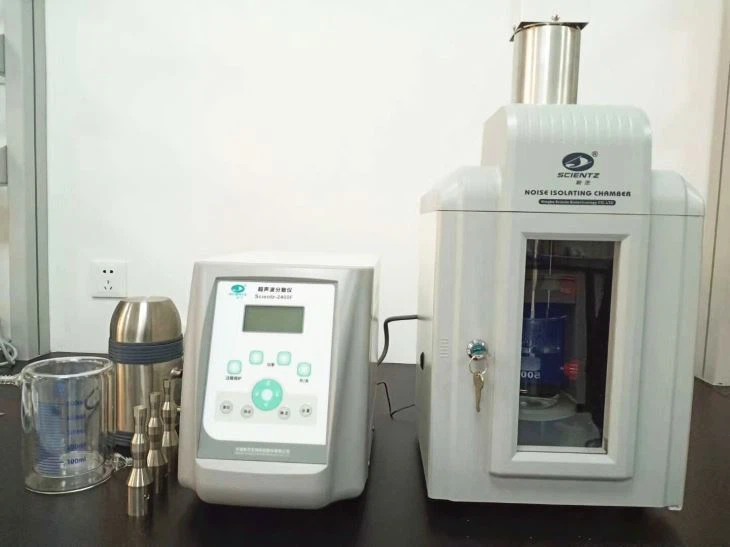
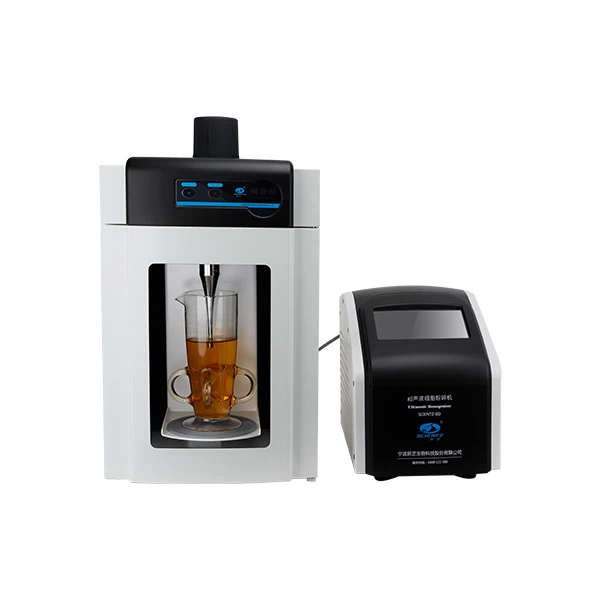
I've heard some folks in the industry say "ultrasonic tech is too expensive for small brands," but honestly, that's not the case anymore. There are models for every budget—from lab-scale units for product development to mid-sized units for small-batch production and full industrial lines for big manufacturers. For example, the SCIENTZ08 is priced right for startups and craft brands, while our Powerful Ultrasonic Homogenizer is built for high-volume plants that need to process thousands of gallons a day. The key is matching the right sonicator to your specific need—whether you're extracting essential oils, making plant-based emulsions, or improving food safety.
Now, let's get real about why this matters beyond just efficiency. Consumers today are demanding cleaner labels, better taste, and more sustainable products. Sonicators help food manufacturers meet all three: less need for chemical additives, better flavor retention, and reduced waste (which is a big win for sustainability). A lot of brands are using ultrasonic tech to market their products as "more natural" or "minimally processed," which resonates with today's shoppers. As someone who works with these machines daily, I can say the feedback from food producers has been overwhelmingly positive—most say they've seen ROI in less than a year, thanks to reduced waste and lower processing costs.
So, if you're in the food industry and curious about how sonicators could work for your business, the first step is figuring out your specific goal. Are you trying to improve extraction yields? Make more stable emulsions? Boost food safety without heat? Our team can help you pick the right model, whether it's a lab-scale unit for testing or an industrial system for full production. We have all the models mentioned here—from the Scientz-IID for precise R&D work to the Ultrasonic Extraction Separator for ingredient extraction, and more. If you want to learn more about how these tools work in different food sectors, head over to our Ultrasonic Homogenizer Application page to see real use cases from other food producers.
If you're ready to chat about how ultrasonic tech can upgrade your food processing, don't hesitate to reach out for a procurement and consultation. Our team has worked with everything from small craft brands to large multinational food companies, and we can help you find a solution that fits your budget, production volume, and specific needs.
References:
- Chemat, F., Rombaut, N., Sicaire, A. G., Meulnier, A., Fabiano-Tixier, A. S., & Bily, A. (2017). Ultrasound assisted extraction of food and natural products: Mechanisms, techniques, applications, and a comparison with other extraction methods. Ultrasonics Sonochemistry, 34, 528-540.
- Zuo, Y., & Zhang, H. (2019). Applications of ultrasonic homogenization in food industry: A review. Trends in Food Science & Technology, 88, 1-10.
- Paniwnyk, L. (2017). Applications of ultrasound in the food industry. Ultrasonics Sonochemistry, 39, 768-774.