

How did the Industrial Revolution affect the production of stomachers?
Dec 10, 2025
Leave a message
Hey there! As a supplier of stomachers, I've often pondered how the Industrial Revolution has shaped the production of these nifty gadgets. In this blog, I'll take you on a journey through time to explore the profound impact of this historical period on the way we make stomachers.
The Pre - Industrial Revolution Era
Before the Industrial Revolution, the production of stomachers was a labor - intensive and artisanal process. Craftsmen would work individually or in small workshops, using basic hand tools to create each piece. These stomachers were often made to order, and the production rate was extremely slow. Each item was unique, with variations in design and quality due to the human element involved.
Materials used were also limited. Wood, leather, and simple metals were the norm. The craftsmanship was highly valued, but the high cost and long production time meant that stomachers were a luxury item, accessible only to the wealthy. It was a time when quality was measured by the skill of the individual craftsman, and there was little standardization in the products.
The Onset of the Industrial Revolution
The Industrial Revolution, which started in the 18th century, brought a wave of changes. One of the most significant was the introduction of machinery. Factories started to replace small workshops, and mass - production became the new norm. This had a direct impact on the production of stomachers.
With the invention of steam - powered machines, tasks that were once done by hand could now be automated. For example, cutting and shaping materials became much faster and more precise. Metalworking machines could produce parts with consistent dimensions, which was a game - changer for the stomacher industry. This standardization led to an improvement in the overall quality of the products, as each part fit together more accurately.
Impact on Materials
The Industrial Revolution also opened up new possibilities for materials. The development of new manufacturing processes allowed for the production of stronger and more durable metals, such as steel. Steel was not only stronger but also more resistant to corrosion, making it an ideal material for stomachers. This meant that the products could last longer and withstand more wear and tear.
Plastics also started to emerge during this period. Although initially in its early stages, the potential of plastics for stomacher production was recognized. Plastics were lightweight, easy to mold, and relatively inexpensive. As the technology advanced, different types of plastics were developed, each with its own set of properties that could be tailored to the specific needs of stomacher design.
Production Efficiency
Mass - production techniques significantly increased the efficiency of stomacher production. Assembly - line production, a concept popularized during the Industrial Revolution, allowed for a continuous flow of work. Workers could specialize in specific tasks, such as attaching handles or assembling parts. This division of labor led to a dramatic increase in the number of stomachers that could be produced in a given time.
For instance, in a pre - industrial workshop, a single craftsman might produce one or two stomachers a day. In an industrial factory, with an assembly line, dozens or even hundreds of stomachers could be churned out daily. This increase in production volume led to a decrease in the cost per unit, making stomachers more affordable for a wider range of consumers.

Standardization and Quality Control
As mentioned earlier, standardization became a key feature of industrial production. With the use of machinery and assembly - line techniques, each stomacher was made to the same specifications. This was a huge advantage for consumers, as they could expect a consistent level of quality.
Quality control also became more systematic. Factories implemented inspection processes at various stages of production. Workers would check for defects in materials, improper assembly, and other issues. This ensured that only high - quality stomachers made it to the market.
Technological Advancements in Stomacher Design
The Industrial Revolution also spurred technological advancements in the design of stomachers. New features were added to improve functionality. For example, the introduction of adjustable settings allowed users to customize the blending or homogenizing process. This was a significant improvement over the one - size - fits - all approach of pre - industrial stomachers.
Modern materials and manufacturing techniques also enabled the development of more compact and portable stomachers. This was especially useful for laboratories and research facilities, where space was often limited. These advancements were made possible by the continuous innovation that was characteristic of the Industrial Revolution.
The Role of Modern Machinery in Current Production
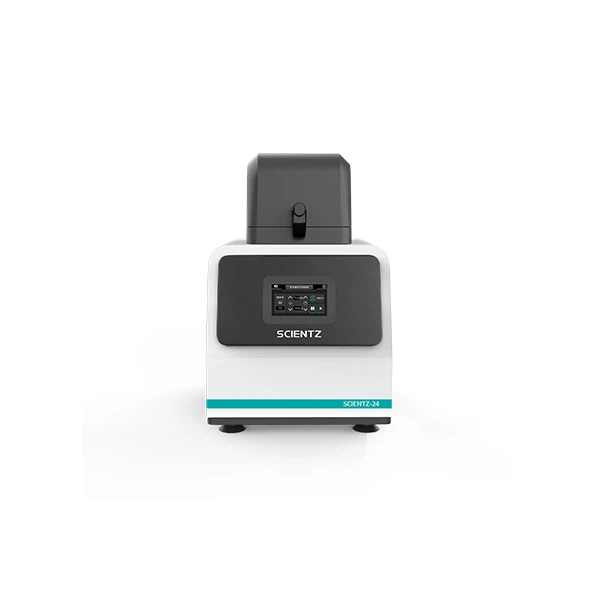
Today, the legacy of the Industrial Revolution lives on in the production of stomachers. We now have access to state - of - the - art machinery that further enhances the production process. For example, the Scientz - 04/09/11L Stick Blender is a great example of modern technology at work. It offers high - speed blending capabilities, which are essential for efficient stomacher production.
The Scientz - 04/09/11L Best Blender is another advanced piece of equipment. It combines power and precision, allowing for the creation of high - quality stomachers. And the 400ml Laboratory Animal Tissue Sterile Homogenizer is a specialized tool that plays a crucial role in the production of stomachers used in laboratory settings.
The Future of Stomacher Production
Looking ahead, the influence of the Industrial Revolution will continue to shape the future of stomacher production. We can expect further advancements in materials, such as the development of even more lightweight and durable composites. Technology will also play a major role, with the integration of smart features like sensors and automation.
These advancements will not only improve the quality and functionality of stomachers but also make the production process more sustainable. For example, new manufacturing techniques may reduce waste and energy consumption.
Why Choose Our Stomachers
As a supplier, we've embraced the legacy of the Industrial Revolution to offer high - quality stomachers. Our products are the result of years of innovation and the use of the latest technology. We understand the needs of our customers, whether they are in a laboratory, a food processing plant, or any other industry that requires stomachers.
We offer a wide range of stomachers to meet different requirements. From basic models for small - scale operations to advanced, high - performance ones for large - scale production. Our commitment to quality and customer satisfaction is unwavering.
Contact Us for Procurement
If you're interested in purchasing stomachers for your business, we'd love to hear from you. Whether you have questions about our products, need a quote, or want to discuss a custom order, we're here to help. Just reach out to us, and our team will be happy to assist you in finding the perfect stomacher for your needs.
References
- Landes, David S. The Unbound Prometheus: Technological Change and Industrial Development in Western Europe from 1750 to the Present. Cambridge University Press, 2003.
- Mokyr, Joel. The Gifts of Athena: Historical Origins of the Knowledge Economy. Princeton University Press, 2002.
- Hounshell, David A. From the American System to Mass Production, 1800 - 1932: The Development of Manufacturing Technology in the United States. Johns Hopkins University Press, 1984.