

What is the stability of sonicators during operation?
Jan 06, 2026
Leave a message
Sonicators are essential equipment in various scientific and industrial fields, playing a crucial role in applications such as cell disruption, emulsification, and sample preparation. As a sonicators supplier, understanding the stability of sonicators during operation is of utmost importance. In this blog post, we will delve into the factors that affect the stability of sonicators, the significance of stability in different applications, and how our products ensure reliable and consistent performance.
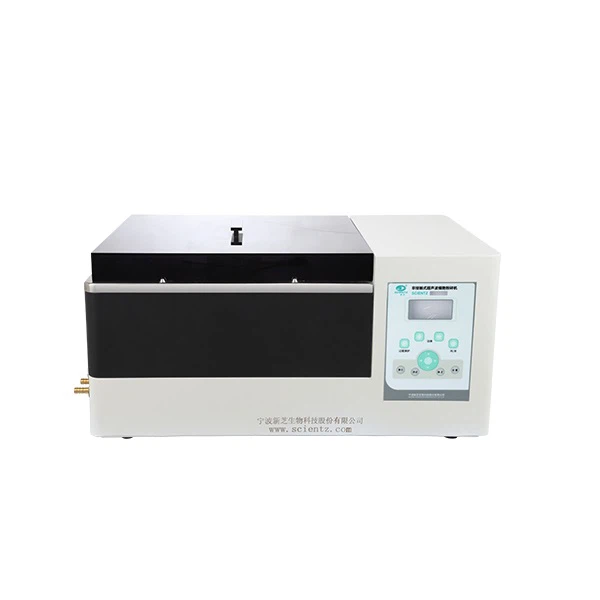
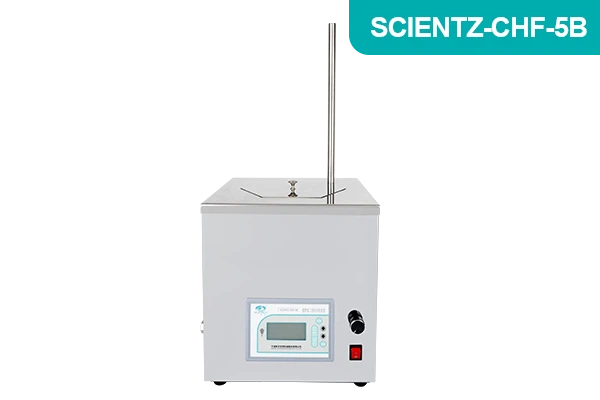
Factors Affecting the Stability of Sonicators
Power Supply
The power supply is a fundamental factor that influences the stability of sonicators. Fluctuations in the power source can lead to inconsistent ultrasonic output, affecting the efficiency and reproducibility of the sonication process. Our sonicators are designed to work with a stable power supply, and they are equipped with advanced power regulation circuits to minimize the impact of power variations. For example, our Power Adjustable LCD Display Sonicator Homogenizer features a precise power control system that maintains a constant ultrasonic output even when there are minor fluctuations in the input power.
Temperature
Temperature can have a significant impact on the performance and stability of sonicators. High temperatures can cause the piezoelectric transducer in the sonicator to overheat, leading to a decrease in ultrasonic efficiency and potential damage to the equipment. To address this issue, our sonicators are equipped with effective cooling systems. For instance, some of our models use water - cooling or air - cooling mechanisms to keep the transducer at an optimal operating temperature. This ensures that the sonicator can operate stably for extended periods without a significant drop in performance.
Frequency Stability
The frequency of the ultrasonic waves is another critical factor for the stability of sonicators. A stable frequency is necessary to ensure consistent cavitation effects, which are the basis of most sonication applications. Our sonicators are designed with high - precision frequency control circuits. These circuits can maintain the ultrasonic frequency within a very narrow range, typically with an accuracy of ± 0.1%. This high level of frequency stability guarantees reliable and reproducible results in various applications.
Load Variation
The load on the sonicator, such as the volume and viscosity of the sample being processed, can also affect its stability. Different samples may require different levels of ultrasonic energy to achieve the desired results. Our sonicators are designed to adapt to a wide range of load variations. For example, our Ultrasonic Two - dimensional Material Stripper can handle samples with different viscosities and volumes, thanks to its intelligent power adjustment function. This function automatically adjusts the ultrasonic output according to the load, ensuring stable and efficient sonication.
Significance of Stability in Different Applications
Cell Disruption
In cell disruption applications, the stability of the sonicator is crucial for obtaining consistent results. If the sonicator is not stable, the degree of cell disruption may vary from one sample to another, leading to inaccurate experimental data. A stable sonicator ensures that the ultrasonic energy is evenly distributed throughout the sample, resulting in a more uniform cell disruption. Our None Touch Small Volume Ultrasonic Homogenizer Equipment Cell Disruptor is specifically designed for cell disruption applications, providing stable and reliable performance to ensure accurate and reproducible results.
Emulsification
Emulsification is another important application of sonicators. In this process, a stable sonicator is necessary to create uniform emulsions. The cavitation effects generated by the ultrasonic waves break down the droplets in the emulsion and disperse them evenly. If the sonicator is unstable, the size and distribution of the droplets in the emulsion may vary, leading to an inconsistent product quality. Our sonicators with high stability can produce emulsions with a narrow droplet size distribution, ensuring high - quality products in industries such as food, cosmetics, and pharmaceuticals.
Sample Preparation
In sample preparation for analytical techniques such as chromatography and spectroscopy, the stability of the sonicator is essential for obtaining representative samples. A stable sonication process ensures that the sample is thoroughly mixed and homogenized, which is crucial for accurate analysis. Our sonicators provide the necessary stability to prepare samples with consistent properties, making them suitable for a wide range of analytical applications.
How Our Sonicators Ensure Stability
Advanced Design and Manufacturing
We use advanced design and manufacturing techniques to ensure the stability of our sonicators. Our R & D team carefully selects high - quality materials for the piezoelectric transducer and other key components. These materials have excellent mechanical and electrical properties, which contribute to the overall stability of the sonicator. Moreover, our manufacturing process is highly standardized, with strict quality control at every stage. This ensures that each sonicator meets our high - quality standards and provides stable performance.
Regular Maintenance and Calibration
We also provide comprehensive after - sales service to ensure the long - term stability of our sonicators. Our technical support team can offer guidance on regular maintenance, such as cleaning the transducer and checking the cooling system. In addition, we recommend regular calibration of the sonicator to ensure its accuracy and stability. Our calibration services are carried out by professional technicians using advanced calibration equipment, which guarantees that the sonicator maintains its optimal performance over time.
Conclusion
The stability of sonicators during operation is a critical factor for their performance and reliability in various scientific and industrial applications. As a sonicators supplier, we are committed to providing high - quality products that offer excellent stability. Our sonicators are designed to overcome the challenges posed by power supply fluctuations, temperature variations, frequency instability, and load changes. Whether you are conducting cell disruption experiments, emulsification processes, or sample preparation for analysis, our sonicators can provide stable and reproducible results.
If you are interested in our sonicators or have any questions about their stability and performance, please feel free to contact us for more information and to discuss your specific requirements. We look forward to working with you to meet your sonication needs.
References
- Mason, T. J. (2000). Practical Sonochemistry: User's Guide to Applications in Chemistry and Chemical Engineering. Ellis Horwood.
- Suslick, K. S., & Price, G. J. (1999). Applications of ultrasound to materials chemistry. Annual Review of Materials Science, 29(1), 295 - 326.
- Leighton, T. G. (1994). The Acoustic Bubble. Academic Press.