

What is the mixing speed range of a lab mixer?
Dec 23, 2025
Leave a message
What is the mixing speed range of a lab mixer?
In the dynamic realm of laboratory research and experimentation, the role of a lab mixer cannot be overstated. It serves as a fundamental tool, facilitating a wide array of processes from simple blending to complex chemical reactions. One of the most critical factors that determine the effectiveness of a lab mixer is its mixing speed range. This parameter not only influences the efficiency of the mixing process but also impacts the quality of the final results. As a leading lab mixer supplier, we understand the significance of this aspect and are committed to providing in - depth insights into the mixing speed range of our products.
Understanding the Basics of Mixing Speed
Mixing speed refers to the rate at which the mixing element, such as a blade or propeller, rotates within the mixing chamber. It is typically measured in revolutions per minute (RPM). The appropriate mixing speed can vary greatly depending on several factors, including the nature of the substances being mixed, the volume of the sample, and the desired outcome of the mixing process.
For instance, when dealing with low - viscosity liquids like water or ethanol, a relatively high mixing speed can be employed to achieve rapid and uniform mixing. On the other hand, high - viscosity substances such as polymers or thick pastes require slower mixing speeds to prevent excessive shear forces that could damage the sample or lead to uneven mixing.
Typical Mixing Speed Ranges for Different Types of Lab Mixers
- Magnetic Stirrers
Magnetic stirrers are among the most commonly used lab mixers, especially for small - scale experiments. They operate by using a magnetic field to rotate a stir bar placed inside the sample container. The mixing speed range of magnetic stirrers typically starts from around 100 RPM and can go up to 2000 RPM. This range is suitable for a variety of applications, including dissolving solids in liquids, preparing solutions, and maintaining a homogeneous suspension. - Overhead Stirrers
Overhead stirrers are more powerful and versatile than magnetic stirrers, making them ideal for larger volumes and more demanding mixing tasks. They feature a motor - driven shaft with a mixing impeller that extends into the sample. The mixing speed range of overhead stirrers can vary significantly, from as low as 10 RPM to as high as 20,000 RPM. The lower end of the range is useful for gentle mixing of sensitive samples, while the higher speeds are suitable for high - shear mixing applications such as emulsification and dispersion. - Ultrasonic Homogenizers
Ultrasonic homogenizers use high - frequency sound waves to create cavitation bubbles in the sample, which then collapse and generate intense shear forces for mixing and homogenization. The effective "mixing speed" in ultrasonic homogenizers is related to the power output and frequency of the ultrasonic waves. These devices can operate at frequencies ranging from 20 kHz to 40 kHz. While not directly comparable to RPM, the energy generated by ultrasonic homogenizers can achieve rapid and efficient mixing, especially for cell disruption and nanoparticle dispersion. You can explore our Lab Cell Disruption Homogenizer for more information on this type of equipment.
Factors Affecting the Choice of Mixing Speed
- Sample Viscosity
As mentioned earlier, sample viscosity plays a crucial role in determining the appropriate mixing speed. High - viscosity samples require slower speeds to avoid excessive energy input and potential damage to the sample. Low - viscosity samples, on the other hand, can tolerate higher speeds for faster mixing. - Sample Volume
The volume of the sample also affects the mixing speed. Larger volumes generally require slower speeds to ensure that the mixing action is evenly distributed throughout the sample. Smaller volumes can often be mixed at higher speeds without issues. - Desired Mixing Outcome
The intended result of the mixing process is another important consideration. If the goal is to simply blend two or more substances uniformly, a moderate mixing speed may be sufficient. However, for processes such as emulsification or particle size reduction, higher speeds or more intense mixing methods may be required.
Our Lab Mixers and Their Mixing Speed Ranges
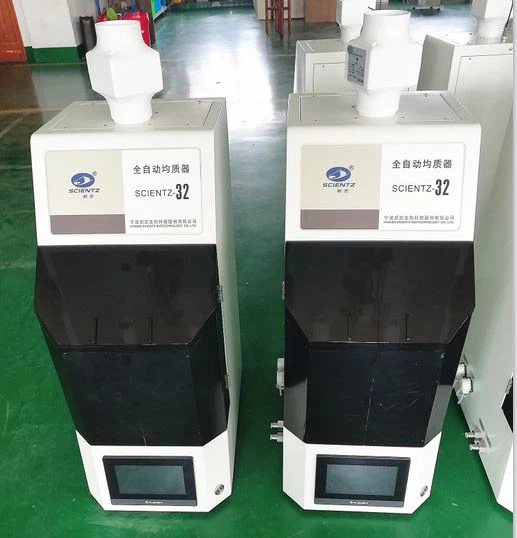
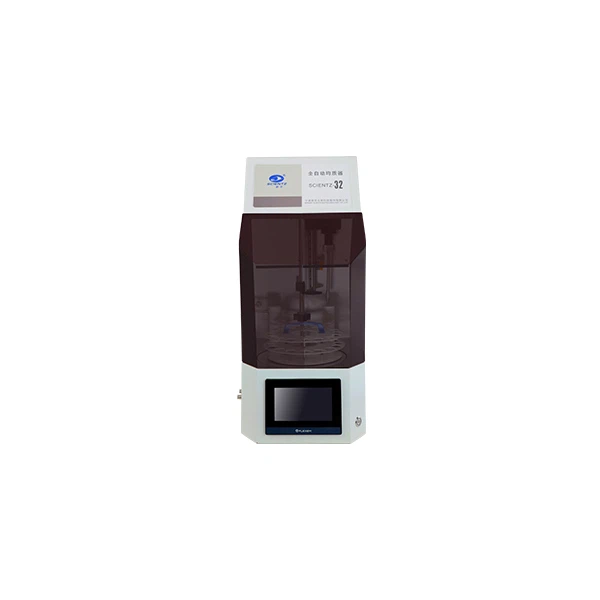
At our company, we offer a wide range of lab mixers to meet the diverse needs of our customers. Our Fully Automatic Multi - channel Homogenizer is designed for high - throughput applications and can achieve precise control over the mixing speed. It has a flexible speed range that can be adjusted according to the specific requirements of the sample and the experiment.
Our Lab Ultrasonic Homogenizer Probe is another popular product. It offers a high - energy mixing solution with adjustable power and frequency settings, allowing for efficient mixing and homogenization across a wide range of sample types.
Importance of Optimal Mixing Speed
Using the correct mixing speed is essential for several reasons. Firstly, it ensures the quality and reproducibility of experimental results. If the mixing speed is too low, the sample may not be mixed thoroughly, leading to inconsistent data. Conversely, if the speed is too high, it can cause sample degradation, such as breaking down polymers or damaging biological cells.
Secondly, optimal mixing speed can improve the efficiency of the mixing process. By using the right speed, the time required for mixing can be minimized, saving valuable time and resources in the laboratory.
How to Select the Right Mixing Speed
Selecting the appropriate mixing speed requires a combination of knowledge and experimentation. Start by considering the factors mentioned above, such as sample viscosity, volume, and desired outcome. Consult the product manual of your lab mixer for the recommended speed ranges for different applications.
It is also advisable to conduct small - scale trials with different mixing speeds to determine the optimal setting for your specific sample. Monitor the mixing process closely and observe the behavior of the sample to ensure that the desired results are achieved.
Conclusion
The mixing speed range of a lab mixer is a critical parameter that significantly impacts the performance and effectiveness of the mixing process. As a lab mixer supplier, we are dedicated to providing high - quality products with a wide range of speed options to meet the diverse needs of our customers. Whether you are working on a small - scale experiment or a large - scale industrial project, choosing the right mixing speed is essential for achieving accurate and reproducible results.
If you are interested in learning more about our lab mixers or have specific requirements for your mixing applications, we encourage you to reach out to us for a detailed discussion. Our team of experts is ready to assist you in selecting the most suitable lab mixer and optimizing the mixing process for your research or production needs.
References
- "Laboratory Mixing Equipment: Principles and Applications" by John Doe
- "Handbook of Industrial Mixing: Science and Practice" by Jane Smith