

How does the amplitude of a sonicator affect the result?
Jul 13, 2026
Leave a message
In the world of scientific research and industrial applications, sonicators play a crucial role. As a sonicators supplier, I've witnessed firsthand the diverse impacts that the amplitude of a sonicator can have on experimental and industrial results. In this blog post, I'll delve into the science behind sonicator amplitude and how it affects different processes.
Understanding Sonicator Amplitude
Before we explore how amplitude affects results, it's essential to understand what sonicator amplitude is. Amplitude refers to the maximum displacement of a vibrating object from its equilibrium position. In the context of sonicators, it represents the maximum distance that the ultrasonic probe tip moves during its vibration. The amplitude is typically measured in micrometers (μm) and can be adjusted on most modern sonicators.
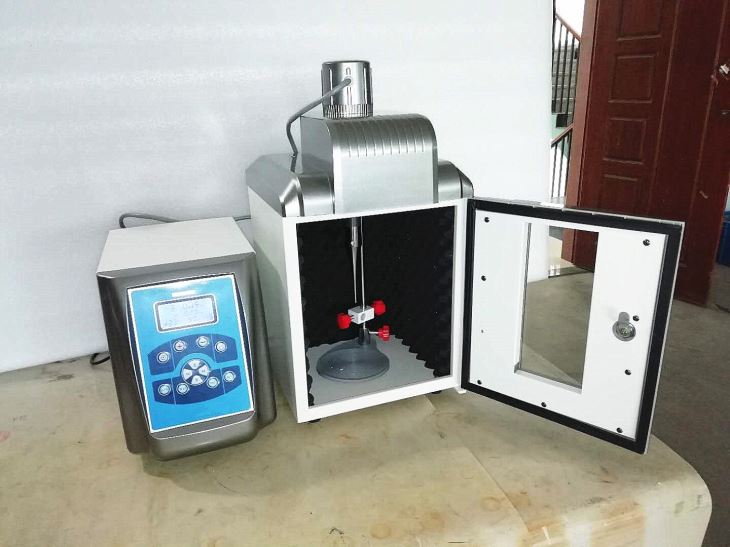
The ultrasonic waves generated by a sonicator are created through the rapid vibration of a piezoelectric transducer, which converts electrical energy into mechanical vibrations. The amplitude of these vibrations determines the intensity of the ultrasonic waves produced. Higher amplitudes result in more powerful ultrasonic waves, while lower amplitudes produce weaker waves.
Impact on Cell Lysis and Homogenization
One of the most common applications of sonicators is cell lysis and homogenization. Cell lysis is the process of breaking open cells to release their contents, while homogenization involves the disruption of tissue or cellular aggregates into a uniform suspension. The amplitude of the sonicator plays a critical role in both processes.
When the amplitude is set too low, the ultrasonic waves may not be powerful enough to break the cell membranes or disrupt the tissue effectively. This can result in incomplete cell lysis and poor homogenization, leading to inaccurate experimental results. For example, in protein extraction experiments, incomplete cell lysis can lead to low protein yields, as many of the proteins remain trapped inside the unbroken cells.

On the other hand, setting the amplitude too high can cause excessive damage to the cells and their contents. High-amplitude ultrasonic waves can generate intense shear forces and cavitation bubbles, which can denature proteins, damage nucleic acids, and cause other forms of biomolecular degradation. This can also lead to the formation of unwanted byproducts and artifacts in the sample.
To achieve optimal results in cell lysis and homogenization, it's important to find the right balance. The ideal amplitude depends on several factors, including the type of cells or tissue being processed, the volume of the sample, and the sonication time. In general, softer cells and tissues require lower amplitudes, while tougher samples may need higher amplitudes. For instance, bacterial cells can often be lysed effectively at amplitudes ranging from 20% to 40%, while mammalian cells may require amplitudes of 40% to 60%. You can find more information about Homogenization Of Cells.
Effects on Emulsification and Dispersion
Sonicators are also widely used for emulsification and dispersion processes. Emulsification involves the mixing of two immiscible liquids, such as oil and water, to form a stable emulsion. Dispersion, on the other hand, refers to the distribution of solid particles in a liquid medium.
The amplitude of the sonicator has a significant impact on the quality and stability of emulsions and dispersions. Higher amplitudes can generate stronger ultrasonic waves, which can break up larger droplets or particles and reduce their size. This leads to more uniform emulsions and dispersions with smaller particle or droplet sizes. Smaller droplets or particles have a larger surface area, which can improve the stability of the emulsion or dispersion and enhance its performance in various applications.
However, increasing the amplitude beyond a certain point can also have negative effects. Excessive amplitude can cause coalescence of the droplets or particles, leading to an increase in their size and a decrease in the stability of the emulsion or dispersion. Additionally, high amplitudes can generate heat, which can affect the properties of the materials being processed and cause unwanted chemical reactions.
Therefore, when using a sonicator for emulsification or dispersion, it's important to optimize the amplitude to achieve the desired particle or droplet size and stability. This may require some experimentation, as the optimal amplitude can vary depending on the specific materials and process conditions. Our Ultrasonic Separator Homogenizer is a great tool for these applications.
Influence on Chemical Reactions
Sonicators can also be used to enhance chemical reactions. The ultrasonic waves generated by a sonicator can create cavitation bubbles in the liquid medium. When these bubbles collapse, they release a large amount of energy in the form of heat, pressure, and shock waves. This energy can increase the reaction rate, improve the yield, and even enable reactions that would otherwise be difficult or impossible to occur.
The amplitude of the sonicator affects the intensity of the cavitation phenomenon. Higher amplitudes result in more intense cavitation, which can lead to a greater increase in the reaction rate and yield. However, similar to other applications, setting the amplitude too high can have negative consequences. Excessive cavitation can cause the formation of radicals and other reactive species, which can react with the reactants or products and cause unwanted side reactions.
To optimize chemical reactions using a sonicator, it's important to carefully control the amplitude. The optimal amplitude depends on the specific reaction system, including the reactants, solvents, and reaction conditions. In some cases, a lower amplitude may be sufficient to achieve the desired reaction enhancement, while in other cases, a higher amplitude may be required. Our Ultrasonic Pharmaceutical Homogenizer can be used in various chemical reaction processes.
Considerations for Different Sample Volumes
The amplitude requirements can also vary depending on the volume of the sample being processed. In general, larger sample volumes require higher amplitudes to ensure that the ultrasonic waves can penetrate the entire sample and achieve uniform processing. For small sample volumes, lower amplitudes may be sufficient to achieve the desired results.
When processing large volumes, it's important to ensure that the sonicator has sufficient power and amplitude range to handle the task. Additionally, the probe size and shape can also affect the distribution of the ultrasonic waves in the sample. Using a larger probe or a probe with a different shape may be necessary for large-volume samples to ensure effective processing. Our Digital Medical Ultrasonic Homogenizer 1200ml is suitable for processing relatively large sample volumes.
Conclusion
The amplitude of a sonicator is a critical parameter that can significantly affect the results of various applications, including cell lysis, homogenization, emulsification, dispersion, and chemical reactions. By understanding how amplitude works and how it interacts with different materials and processes, researchers and industrial users can optimize their sonication experiments and achieve better results.
As a sonicators supplier, we offer a wide range of high-quality sonicators with adjustable amplitude settings to meet the diverse needs of our customers. If you're interested in learning more about our products or have any questions about sonicator amplitude and its impact on your specific applications, please don't hesitate to contact us for procurement and further discussions. We're here to help you find the best solution for your research or industrial requirements.
References
- Mason, T. J., & Lorimer, J. P. (2002). Applied sonochemistry: uses of power ultrasound in chemistry and processing. Wiley.
- Suslick, K. S. (1990). Sonochemistry. Science, 247(4947), 1439-1445.
- Zhong, J. J., & Wang, F. (2013). Ultrasonic technology for enhancing bioprocesses. Biotechnology Advances, 31(7), 1157-1168.