

Can a ball mill be used for ultrafine grinding?
Jul 07, 2026
Leave a message
In the world of material processing, the demand for ultrafine grinding has been on the rise due to the increasing need for high - performance materials in various industries such as electronics, pharmaceuticals, and advanced ceramics. As a ball mill supplier, I am often asked whether a ball mill can be used for ultrafine grinding. In this blog, I will explore this question in detail, discussing the capabilities, limitations, and factors to consider when using a ball mill for ultrafine grinding.
Understanding Ball Mills
A ball mill is a type of grinder used to grind and blend materials for use in mineral dressing processes, paints, pyrotechnics, ceramics, and selective laser sintering. It works by rotating a cylinder with steel grinding balls, causing the balls to fall back into the cylinder and onto the material to be ground. The rotation can be either clockwise or counter - clockwise. There are different types of ball mills, including horizontal ball mills, vertical ball mills, and planetary ball mills.
The basic principle of a ball mill is simple. The impact and friction between the grinding balls and the material result in the size reduction of the material. However, achieving ultrafine grinding requires a more in - depth understanding of the process and the factors that influence it.
Capabilities of Ball Mills for Ultrafine Grinding
Ball mills have the potential to achieve ultrafine grinding under the right conditions. One of the key advantages of ball mills is their ability to handle a wide range of materials, including hard and brittle materials, soft and fibrous materials, and even some high - viscosity materials.
For hard materials, the high - energy impact of the grinding balls can break down the particles into smaller sizes. In the case of soft materials, the friction between the balls and the material can gradually reduce the particle size. With proper control of the operating parameters such as rotation speed, ball size, and grinding time, ball mills can produce particles in the sub - micron range.
For example, in the production of ceramic powders, ball mills are commonly used to achieve ultrafine particle sizes. By carefully selecting the grinding media and adjusting the process parameters, it is possible to obtain ceramic powders with a particle size of less than 1 micron, which is crucial for the high - performance of ceramic products.
Limitations of Ball Mills in Ultrafine Grinding
Despite their capabilities, ball mills also have some limitations when it comes to ultrafine grinding. One of the main challenges is the agglomeration of particles. As the particles become smaller, they tend to agglomerate due to the increased surface energy. This can lead to a decrease in the grinding efficiency and make it difficult to achieve the desired ultrafine particle size.
Another limitation is the contamination issue. The grinding balls and the inner lining of the ball mill can wear during the grinding process, which may introduce contaminants into the material. This is a significant concern, especially in industries such as pharmaceuticals and electronics, where high - purity materials are required.

In addition, the energy consumption of ball mills for ultrafine grinding can be relatively high. As the particle size decreases, more energy is needed to break the particles, and the grinding process becomes less efficient. This can result in increased production costs and environmental impacts.
Factors Affecting Ultrafine Grinding in Ball Mills
To overcome the limitations and achieve effective ultrafine grinding in ball mills, several factors need to be considered.
Grinding Media
The choice of grinding media is crucial for ultrafine grinding. The size, shape, and material of the grinding balls can significantly affect the grinding efficiency and the final particle size. Smaller grinding balls generally provide a higher surface area for grinding, which can lead to a more efficient size reduction. However, very small balls may have a lower impact energy, which may limit their ability to break down hard particles.
The material of the grinding media also matters. For example, ceramic balls are often used in applications where contamination is a concern, as they are less likely to introduce metal contaminants compared to steel balls.
Rotation Speed
The rotation speed of the ball mill affects the movement of the grinding balls and the impact energy. A higher rotation speed can increase the impact energy of the balls, which is beneficial for breaking down large particles. However, if the rotation speed is too high, it may cause the balls to centrifugally adhere to the inner wall of the cylinder, reducing the grinding efficiency. Therefore, an optimal rotation speed needs to be determined based on the type of material and the desired particle size.
Grinding Time
The grinding time is another important factor. Longer grinding times generally result in smaller particle sizes. However, there is a point of diminishing returns, where further grinding may not significantly reduce the particle size but may increase the risk of agglomeration and contamination. Therefore, it is necessary to find the optimal grinding time through experimentation.
Material Properties
The properties of the material being ground, such as hardness, brittleness, and viscosity, also play a role in ultrafine grinding. Hard and brittle materials are generally easier to grind compared to soft and fibrous materials. High - viscosity materials may require special processing techniques or the addition of dispersants to improve the grinding efficiency.
Comparison with Other Ultrafine Grinding Technologies
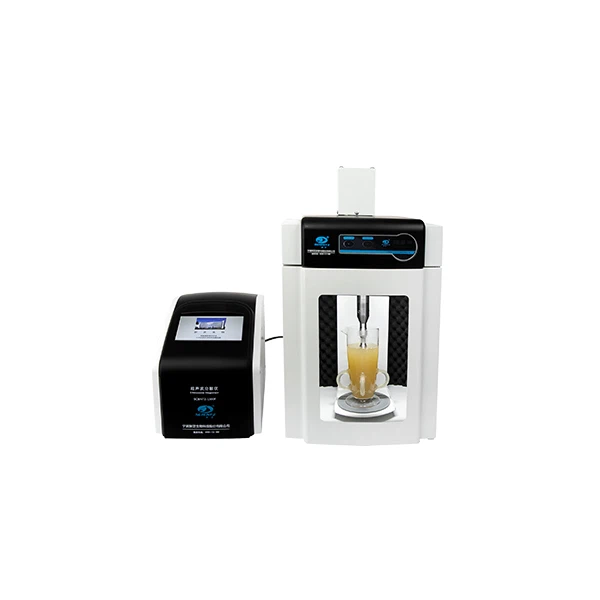
There are other technologies available for ultrafine grinding, such as ultrasonic grinding. The The Graphene Ultrasonic Equipment and Ultrasonic Dispersion Homogenizer use ultrasonic waves to break down particles. These technologies can offer some advantages over ball mills, such as lower energy consumption and less agglomeration.
For instance, the SCIENTZ - CF Ultrasonic Bacteria Dispersion Counter can be used for precise and efficient dispersion of bacteria, which is difficult to achieve with a ball mill. However, ball mills are still widely used due to their versatility, relatively low cost, and ability to handle large - scale production.
Applications of Ball Mills in Ultrafine Grinding
Ball mills are used in a variety of industries for ultrafine grinding. In the pharmaceutical industry, they are used to grind active pharmaceutical ingredients (APIs) to achieve the required particle size for better dissolution and bioavailability. In the electronics industry, ball mills are used to produce ultrafine powders for the manufacturing of electronic components such as capacitors and resistors.
In the mining industry, ball mills are used to grind ores to a fine powder for further processing. The ultrafine grinding of ores can improve the extraction efficiency of valuable metals.
Conclusion
In conclusion, a ball mill can be used for ultrafine grinding, but it has its own set of capabilities and limitations. By carefully considering the factors such as grinding media, rotation speed, grinding time, and material properties, it is possible to achieve effective ultrafine grinding in a ball mill. Although there are other technologies available for ultrafine grinding, ball mills remain a popular choice due to their versatility and cost - effectiveness.
If you are interested in using a ball mill for your ultrafine grinding needs, or if you have any questions about our ball mill products, please feel free to contact us for a detailed discussion. We are committed to providing high - quality ball mills and professional technical support to meet your specific requirements.
References
- King, R. P. (2001). Mineral Processing Design and Operations: An Introduction. Butterworth - Heinemann.
- Svarovsky, L. (1990). Solid - Liquid Separation. Butterworth - Heinemann.
- Gaudin, A. M. (1939). Principles of Mineral Dressing. McGraw - Hill.