

Can sonicators be used for desorption?
Jan 20, 2026
Leave a message
Can sonicators be used for desorption? That's a question I've been getting a lot lately, and as a supplier of high - quality sonicators, I'm here to share some insights.
First off, let's quickly understand what desorption is. Desorption is the reverse process of adsorption, where a substance that has been adsorbed (stuck to the surface of another material) is released. It has a wide range of applications, from environmental cleanup to chemical processing.
Now, sonicators work by generating high - frequency sound waves. When these waves travel through a liquid, they create alternating high - and low - pressure cycles. In the low - pressure part, tiny bubbles form, a phenomenon called cavitation. When these bubbles collapse during the high - pressure phase, they release a huge amount of energy in a very small area. This energy can be used to break the bonds that hold adsorbed substances to surfaces, which means sonicators can potentially be used for desorption.
Let me give you an example. In water treatment, there are often pollutants that get adsorbed onto activated carbon or other adsorbent materials. To reuse these adsorbents or to recover valuable substances, we need to desorb the pollutants. Sonicators can be a great solution here. The intense energy from cavitation can disrupt the weak forces between the pollutants and the adsorbent surface, causing the pollutants to be released back into the liquid.
In the field of biomedicine, desorption is also crucial. For instance, in drug delivery systems, drugs are often adsorbed onto nanoparticles. To release the drugs at the right time and place in the body, we can use sonicators. The ultrasonic energy can trigger the desorption of the drugs from the nanoparticles, allowing them to start working.
One of our customers in the environmental industry was dealing with soil contaminated with heavy metals. The heavy metals were adsorbed onto soil particles, and traditional methods of desorption were time - consuming and expensive. They decided to give our sonicators a try. After a few tests, they found that using our sonicators significantly increased the desorption rate of heavy metals from the soil. This not only saved them a lot of time but also reduced the overall cost of the cleanup process.
Now, I know some of you might be thinking, "Are there any limitations?" Well, there are a few things to consider. The effectiveness of desorption using sonicators depends on several factors. The type of adsorbent and adsorbate matters a lot. Some substances have very strong bonds with the adsorbent, and it might be more difficult to desorb them using sonicators alone. Also, the power and frequency of the sonicator need to be carefully adjusted. Too low a power might not be enough to break the bonds, while too high a power could damage the adsorbent or cause unwanted chemical reactions.
Another aspect is the scale of operation. In a laboratory setting, it's relatively easy to control the parameters and see good results. But when it comes to large - scale industrial applications, there are more challenges. We're constantly working on improving our sonicators to make them more suitable for large - scale desorption processes.
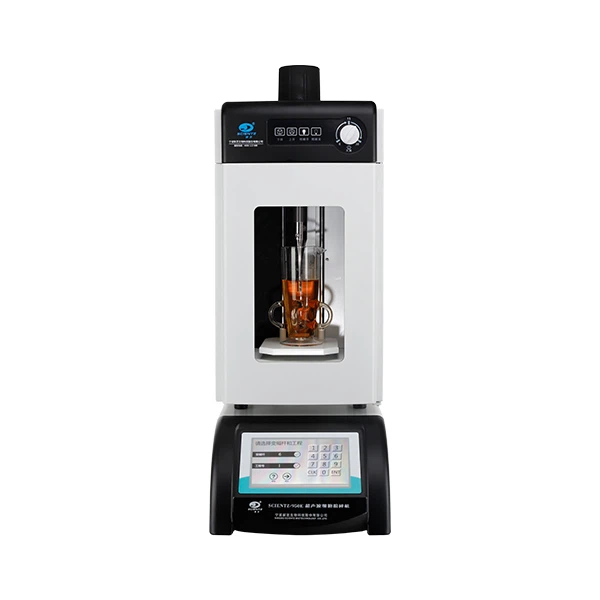

If you're in the cannabis extraction industry, you might be interested in our High Quality Ultrasonic Cannabis Extraction Machine. It uses the principle of sonication and can also be related to desorption processes. The ultrasonic waves can help in releasing the desired compounds from the cannabis plant material, which is a form of desorption in a way.
For those in the food industry, our Ultrasonic Homogenizer Food can also be used in processes that involve desorption. For example, in the extraction of flavors or nutrients from food ingredients, sonication can enhance desorption and improve the overall efficiency of the process.
And if you're working on sample emulsification, homogenization, or dispersion, our Ultrasonic Homogenizer For Sample Emulsification, Homogenization, Dispersion can be a valuable tool. Even in these processes, desorption can play a role, especially when you're trying to release substances from solid matrices in your samples.
In conclusion, sonicators have great potential for desorption applications. They offer a more efficient and often more environmentally friendly alternative to traditional desorption methods. However, like any technology, it's important to understand its capabilities and limitations.
If you're interested in exploring how our sonicators can be used for your desorption needs, we'd love to have a chat. Whether you're in a research lab or an industrial facility, we can provide you with the right solutions and answer all your questions. So, feel free to reach out and start a conversation about potential purchases and how we can help you optimize your desorption processes.
References
- Mason, T. J., & Lorimer, J. P. (2002). Applied Sonochemistry: The Uses of Power Ultrasound in Chemistry and Processing. Wiley.
- Suslick, K. S. (1990). Sonochemistry. Science, 247(4941), 1439 - 1445.