

What is the power consumption of a lab blender?
Oct 30, 2025
Leave a message
Hey there! As a supplier of lab blenders, I often get asked about the power consumption of these nifty machines. It's a crucial question, especially for those running labs on a budget or looking to cut down on energy costs. So, let's dig into what affects the power consumption of a lab blender and how you can make informed decisions.
Understanding the Basics of Power Consumption
First off, power consumption is measured in watts (W). Simply put, it tells you how much energy a device uses per hour. For lab blenders, the power consumption can vary widely depending on several factors.
One of the main factors is the motor. A more powerful motor generally means higher power consumption. Lab blenders come with motors of different sizes and capabilities. Some are designed for light - duty tasks like mixing small samples, while others are built for heavy - duty work such as homogenizing tough tissues.
The speed settings also play a huge role. When you set your blender to a higher speed, the motor has to work harder, which in turn uses more power. Think of it like driving a car. If you floor the accelerator, you're going to use more fuel. Similarly, a lab blender on high speed is going to guzzle more electricity.
Power Consumption of Different Types of Lab Blenders
Let's take a look at some common types of lab blenders and their typical power consumption.
LCD Laboratory Ultrasonic Sterile Homogenizer
The LCD Laboratory Ultrasonic Sterile Homogenizer is a high - tech piece of equipment. It uses ultrasonic waves to break down cells and homogenize samples. These machines usually have a power consumption ranging from 100W to 500W. The exact amount depends on the size of the sample chamber, the intensity of the ultrasonic waves, and the duration of operation.

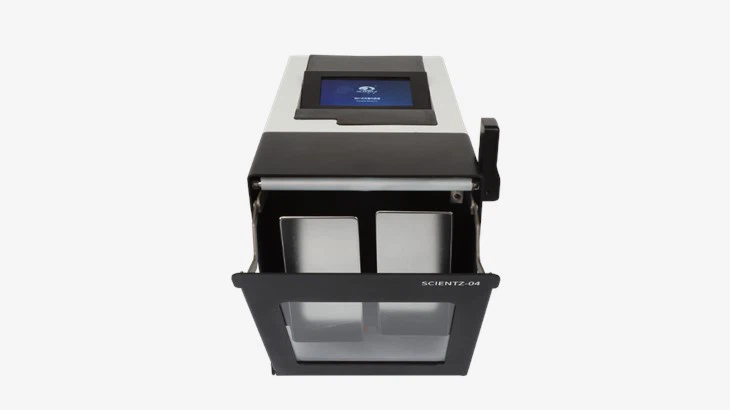
For example, if you're using it for a short, low - intensity homogenization process, you'll be on the lower end of the power consumption scale. But if you're dealing with large volumes or tough samples that require high - intensity ultrasonic waves, the power consumption will be closer to 500W.
LCD Display Paddle Blender
The LCD Display Paddle Blender is a popular choice for mixing and blending samples. It works by using paddles to agitate the sample. These blenders typically have a power consumption between 50W and 200W.
The power usage here is mainly influenced by the speed of the paddles and the size of the mixing chamber. A smaller chamber with slower paddle speed will use less power, while a larger chamber and faster speed will increase the power consumption.
Adjustable Power Speed LCD Display Stomacher Vacuum Stainless Steel Mini Blender
The Adjustable Power Speed LCD Display Stomacher Vacuum Stainless Steel Mini Blender is a compact and versatile option. It allows you to adjust the power and speed according to your needs.
This type of blender usually has a power consumption in the range of 30W to 150W. Since it's a mini - blender, it's designed for smaller samples and less demanding tasks, which is why the power consumption is relatively low. However, if you crank up the speed and power settings, the consumption will go up.
Factors Affecting Power Consumption in Detail
Sample Viscosity
The thickness or viscosity of the sample you're blending matters a lot. If you're blending a thin liquid, the blender doesn't have to work as hard, so the power consumption will be lower. But if you're dealing with a thick paste or a sample with a high solid content, the motor has to exert more force to blend it, leading to higher power usage.
Blending Time
The longer you run the blender, the more power it will consume. It's a no - brainer. So, if you can optimize your blending process to reduce the time, you'll save on energy costs. For example, if you can achieve the same level of homogenization in 5 minutes instead of 10, you've just cut your power consumption in half.
Blender Efficiency
The design and quality of the blender also affect power consumption. A well - designed blender with high - quality components will be more efficient and use less power to achieve the same results as a poorly designed one. When choosing a lab blender, look for models that are known for their energy efficiency.
Tips to Reduce Power Consumption
Here are some practical tips to help you reduce the power consumption of your lab blender:
- Choose the Right Blender: Select a blender that is appropriate for the size and type of samples you typically work with. Don't use a high - power blender for small, simple tasks.
- Optimize Speed Settings: Use the lowest speed setting that can still achieve the desired blending results. There's no need to go full throttle all the time.
- Pre - process Samples: If possible, pre - chop or pre - mix your samples to reduce the workload on the blender. This can significantly cut down on power consumption.
- Maintain Your Blender: Regular maintenance, such as cleaning the blades and lubricating the motor, can keep the blender running efficiently and reduce power usage.
Making an Informed Decision
When you're in the market for a lab blender, power consumption should be one of the factors you consider. But it's not the only thing. You also need to think about the blender's performance, reliability, and price.
If you're looking for a high - performance blender that can handle tough tasks, you might have to accept a higher power consumption. On the other hand, if energy efficiency is your top priority, there are plenty of options available that offer a good balance between power usage and performance.
Contact Us for Your Lab Blender Needs
If you're interested in learning more about our lab blenders or have any questions about power consumption, feel free to reach out. We're here to help you find the perfect blender for your lab. Whether you need a LCD Laboratory Ultrasonic Sterile Homogenizer, a LCD Display Paddle Blender, or an Adjustable Power Speed LCD Display Stomacher Vacuum Stainless Steel Mini Blender, we've got you covered. Let's start a conversation and see how we can meet your lab's requirements.
References
- General knowledge of lab equipment technology and energy consumption principles.
- Industry reports on the performance and power usage of lab blenders.