

What is the mixing principle of a planetary lab mixer?
Jan 08, 2026
Leave a message
Hey there! As a supplier of lab mixers, I'm super excited to dive into the topic of what the mixing principle of a planetary lab mixer is. Let's break it down step by step and see how this nifty piece of equipment works its magic.
The Basics of a Planetary Lab Mixer
First off, a planetary lab mixer is a type of mixer that's widely used in laboratories for various applications, like mixing chemicals, preparing samples, and even in the food and pharmaceutical industries. It's designed to provide a high - quality, thorough mixing of different substances, whether they're liquids, powders, or a combination of both.
The name "planetary" comes from its unique mixing action, which is similar to the movement of planets in our solar system. In a planetary lab mixer, there are two main types of motion: rotation and revolution.
Rotation: The Spin of the Mixing Tool
The mixing tool, usually a blade or a paddle, rotates on its own axis. This rotation is crucial because it helps to break up clumps and disperse the materials. Think of it like a mini tornado inside the mixing bowl. As the blade spins, it creates a powerful force that pulls the substances towards it, effectively shearing and blending them.
For example, if you're mixing a powder and a liquid, the rotating blade will cut through the powder particles, wetting them and incorporating them into the liquid. This process is essential for achieving a homogeneous mixture. The speed of rotation can often be adjusted depending on the specific requirements of the mixing task. A higher rotation speed might be needed for more viscous materials or to break down tough clumps, while a lower speed could be sufficient for gentle mixing of delicate substances.
Revolution: The Orbital Movement
In addition to the rotation of the mixing tool, the entire mixing assembly revolves around the center of the mixing bowl. This orbital movement is what gives the planetary mixer its unique and efficient mixing ability. As the mixing tool moves in a circular path around the bowl, it covers every corner of the container, ensuring that all the materials are evenly mixed.
The combination of rotation and revolution creates a complex flow pattern within the mixing bowl. This flow pattern helps to eliminate dead zones where the materials might not be properly mixed. It also promotes a more thorough exchange of materials, as different parts of the mixture are constantly being brought into contact with the mixing tool.
How the Mixing Principle Benefits Laboratory Work
The planetary mixing principle offers several advantages in a laboratory setting. Firstly, it provides a high degree of mixing efficiency. The combination of rotation and revolution means that the mixer can achieve a homogeneous mixture in a relatively short amount of time compared to other types of mixers. This is especially important when working on time - sensitive experiments or when large batches of materials need to be prepared quickly.
Secondly, the planetary mixer can handle a wide range of viscosities. Whether you're working with a thin liquid or a thick paste, the mixer can adjust its mixing action to ensure proper blending. For instance, in the pharmaceutical industry, it can be used to mix drugs in different forms, from liquid suspensions to semi - solid creams.
Another benefit is the reproducibility of the mixing results. Since the mixing principle is based on well - defined mechanical movements, it's easier to set up consistent mixing conditions. This means that you can expect the same high - quality mixture every time you use the mixer, which is crucial for accurate scientific research and development.
Real - World Applications
Let's take a look at some real - world applications of planetary lab mixers. In the chemical industry, they're used to mix polymers, resins, and adhesives. The thorough mixing provided by the planetary action ensures that the chemical properties of these materials are consistent, which is essential for their performance in various applications.
In the food industry, planetary mixers are used to make dough, batters, and sauces. They can handle large volumes of ingredients and ensure that the final product has a uniform texture and taste. For example, when making bread dough, the mixer can knead the dough thoroughly, developing the gluten and creating a smooth, elastic texture.
In the research laboratory, planetary mixers are used for sample preparation. Scientists can use them to mix different chemicals for experiments, ensuring that the samples are evenly distributed and representative of the overall mixture. This is crucial for accurate data collection and analysis.
Related Products in Our Catalog
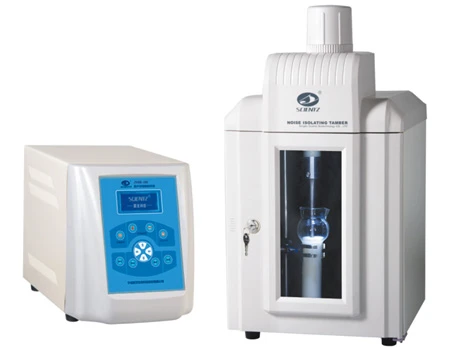
If you're interested in other lab equipment related to mixing and sample preparation, we also offer some great products. Check out our Scientz - IID New Type Of Ultrasonic Processor With 7 TFT Touch Display. This ultrasonic processor is a powerful tool for homogenizing, emulsifying, and dispersing samples. It uses ultrasonic waves to create cavitation bubbles, which can break down particles and mix substances at a microscopic level.
Another great option is the JY99 - IIDN Sonicator. This sonicator is designed for laboratory use and offers precise control over the ultrasonic power and time. It's ideal for a wide range of applications, from cell disruption to nanoparticle synthesis.
And if you're looking for a more compact and adjustable option, our Laboratory Power Adjustable Nano Probe Sonicator might be just what you need. It allows you to adjust the power of the ultrasonic probe, making it suitable for different sample sizes and types.
Why Choose Our Planetary Lab Mixers
Our planetary lab mixers are designed with the latest technology and high - quality materials. They're built to last and provide reliable performance. We offer a range of models with different capacities and features to meet your specific needs. Whether you're a small research lab or a large industrial facility, we have a mixer that's right for you.
Our customer support team is also always ready to help. If you have any questions about our products, how to use them, or need advice on which mixer is best for your application, just reach out to us. We're committed to providing you with the best possible service and ensuring that you're satisfied with your purchase.

Contact Us for Purchase and Consultation
If you're interested in learning more about our planetary lab mixers or any of our other products, don't hesitate to contact us. We're here to help you find the perfect equipment for your laboratory needs. Whether you're looking to make a purchase or just want to have a chat about your requirements, we're only a message or a call away. Let's start a conversation and see how we can work together to improve your laboratory processes.
References
- Smith, J. (2018). Laboratory Mixing Equipment: Principles and Applications. Journal of Laboratory Science, 25(3), 123 - 135.
- Johnson, A. (2019). Planetary Mixers in the Food Industry: A Review. Food Technology Magazine, 40(2), 78 - 85.
- Brown, C. (2020). Ultrasonic Processing for Laboratory Applications. Ultrasonics Journal, 32(4), 201 - 210.