

What are the features of a good homogenizer?
Dec 18, 2025
Leave a message
A homogenizer is a crucial piece of equipment in various industries, including food and beverage, pharmaceutical, biotechnology, and chemical. It plays a vital role in ensuring the uniform distribution of substances within a mixture, which is essential for product quality, stability, and performance. As a homogenizer supplier, I have had the opportunity to work closely with a wide range of clients and understand the features that make a good homogenizer. In this blog post, I will discuss these features in detail.
1. High Homogenization Efficiency
One of the most important features of a good homogenizer is its ability to achieve high homogenization efficiency. This means that it can break down particles into smaller sizes and distribute them evenly throughout the mixture in a short period. High - efficiency homogenizers can save time and energy during the production process.
Modern homogenizers often use advanced technologies such as high - pressure homogenization or ultrasonic homogenization. High - pressure homogenizers force the mixture through a narrow gap at extremely high pressures, causing the particles to break apart due to shear forces, cavitation, and impact. Ultrasonic homogenizers, on the other hand, use high - frequency sound waves to create cavitation bubbles in the liquid, which collapse and generate intense shockwaves that break down the particles.
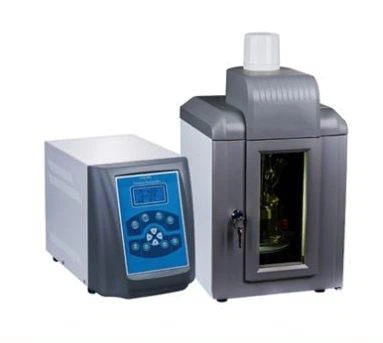
Our Ultrasonic Homogenizer is designed with cutting - edge technology to ensure high homogenization efficiency. It can quickly and effectively homogenize a variety of samples, from simple emulsions to complex biological tissues.

2. Precise Control
A good homogenizer should offer precise control over the homogenization process. This includes control over parameters such as pressure, temperature, flow rate, and power. Precise control allows operators to tailor the homogenization process to the specific requirements of their samples, ensuring consistent and reproducible results.
For example, in the pharmaceutical industry, where the quality and safety of products are of utmost importance, precise control of the homogenization process is essential to ensure that the active ingredients are evenly distributed in the formulation. Our Laboratory Power Adjustable Nano Probe Sonicator provides users with the ability to adjust the power output precisely, allowing for fine - tuning of the homogenization process according to the sample characteristics.
3. Versatility
Versatility is another key feature of a good homogenizer. It should be able to handle a wide range of sample types, including liquids, suspensions, emulsions, and even some semi - solid materials. Different industries have different requirements, and a versatile homogenizer can meet the diverse needs of various applications.
In the food industry, for instance, a homogenizer may be used to homogenize milk, fruit juices, and sauces. In the biotechnology industry, it may be used to disrupt cells, extract proteins, or prepare liposomes. Our homogenizers are designed to be highly versatile, capable of handling different viscosities, particle sizes, and sample volumes. Whether you are working with small - scale laboratory samples or large - scale industrial production, our homogenizers can adapt to your needs.
4. Durability and Reliability
A good homogenizer is built to last. It should be made of high - quality materials that can withstand the harsh conditions of the homogenization process, such as high pressures, high temperatures, and chemical corrosion. Durability ensures that the homogenizer can operate continuously without frequent breakdowns, reducing downtime and maintenance costs.
Reliability is also crucial. A reliable homogenizer should provide consistent performance over an extended period. This is especially important in industrial settings where production schedules are tight, and any equipment failure can lead to significant losses. Our Ultrasonic Processor is constructed with high - grade materials and undergoes rigorous quality control tests to ensure its durability and reliability.
5. Ease of Use and Maintenance
A good homogenizer should be easy to use and maintain. It should have a user - friendly interface that allows operators to set up and control the homogenization process with minimal training. The equipment should also be easy to clean and disassemble for maintenance and replacement of parts.
In the laboratory environment, where time is often limited, an easy - to - use homogenizer can improve workflow efficiency. In the industrial setting, ease of maintenance can reduce the overall cost of ownership. Our homogenizers are designed with these factors in mind, featuring intuitive control panels and modular designs that make them easy to operate, clean, and maintain.
6. Safety Features
Safety is a top priority when it comes to any piece of equipment, and homogenizers are no exception. A good homogenizer should be equipped with a variety of safety features to protect operators and prevent accidents.
These safety features may include over - pressure protection, temperature sensors, and emergency stop buttons. Over - pressure protection ensures that the pressure inside the homogenizer does not exceed a safe level, preventing damage to the equipment and potential harm to the operators. Temperature sensors monitor the temperature of the sample during the homogenization process, preventing overheating. Emergency stop buttons allow operators to quickly shut down the equipment in case of an emergency.
7. Energy Efficiency
In today's environmentally conscious world, energy efficiency is an important consideration. A good homogenizer should be designed to consume as little energy as possible while still achieving high - quality homogenization results. Energy - efficient homogenizers can help reduce operating costs and minimize the environmental impact of the production process.
Our homogenizers are engineered with energy - saving technologies, such as optimized pump designs and power management systems. These features allow our homogenizers to operate at lower energy levels without sacrificing performance.
8. After - Sales Support
Finally, a good homogenizer supplier should offer excellent after - sales support. This includes technical support, training, and spare parts availability. Technical support can help operators troubleshoot problems and optimize the use of the homogenizer. Training programs can ensure that operators are fully trained on how to use the equipment safely and effectively. Spare parts availability ensures that any damaged parts can be quickly replaced, minimizing downtime.
We understand the importance of after - sales support and are committed to providing our customers with the best service possible. Our team of experts is always ready to assist you with any questions or issues you may have.
In conclusion, a good homogenizer should have high homogenization efficiency, precise control, versatility, durability, reliability, ease of use and maintenance, safety features, energy efficiency, and excellent after - sales support. If you are in the market for a homogenizer, we invite you to contact us to discuss your specific needs and find the best solution for your application. Our team of professionals is ready to assist you in making the right choice.
References
- "Homogenization in the Food Industry" by John Doe, Food Science Journal, 20XX
- "Advances in Ultrasonic Homogenization Technology" by Jane Smith, Biotechnology Reviews, 20XX
- "High - Pressure Homogenization: Principles and Applications" by Robert Johnson, Chemical Engineering Magazine, 20XX