

Can a lab blender be used for blending in a high - altitude area?
Dec 09, 2025
Leave a message
Can a lab blender be used for blending in a high - altitude area?
As a supplier of lab blenders, I often receive a variety of inquiries from customers. One question that has recently caught my attention is whether a lab blender can be used effectively in a high - altitude area. To address this issue, we need to look into several aspects related to the characteristics of high - altitude environments and the operating principles of lab blenders.
Characteristics of High - Altitude Areas
High - altitude areas are typically defined as regions with an elevation above 2,500 meters (8,200 feet). These areas are characterized by lower atmospheric pressure, lower oxygen levels, and potentially lower temperatures compared to sea - level regions.
The lower atmospheric pressure is a key factor that can impact the performance of many mechanical and electrical devices. At high altitudes, the air is less dense. This means that there are fewer air molecules present in a given volume of space. For instance, at an altitude of 4,000 meters, the atmospheric pressure is approximately 60% of that at sea level.
How Lab Blenders Work
Lab blenders, also known as homogenizers in some cases, are used to mix, blend, or emulsify substances in a laboratory setting. They work by using a motor to drive a rotating blade or a set of paddles at high speeds. The mechanical force generated by the rotation breaks down the substances and creates a uniform mixture.
There are different types of lab blenders available in the market. For example, the New Sterile Homogenizer Equipment is designed to provide a sterile environment for blending sensitive biological samples. The Sterile Slap Homogenizer uses a slapping mechanism to homogenize samples without the need for direct contact with blades. And the Laboratory LCD Display Programming Laboratory Stomacher Germfree Homogenizer offers programmable features for more precise blending operations.
Impact of High - Altitude Conditions on Lab Blenders
1. Cooling of the Motor
Most lab blenders rely on air circulation to cool the motor during operation. At high altitudes, the lower air density reduces the efficiency of convective heat transfer. Since there are fewer air molecules to carry away the heat generated by the motor, the motor may heat up more quickly. This can lead to overheating, which in turn can cause damage to the motor or reduce its lifespan.
To mitigate this issue, some advanced lab blenders are equipped with improved cooling systems. These systems may include larger heat sinks or more efficient fans. However, even with these enhancements, the overall cooling performance may still be affected at high altitudes.
2. Pressure Sealing
Many lab blenders are designed to operate under normal atmospheric pressure at sea level. In high - altitude areas, the lower external pressure can create a pressure differential between the inside and the outside of the blender. If the blender has poor pressure - sealing capabilities, this pressure differential can cause leaks. For example, in blenders used for handling liquid samples, the lower external pressure may cause the liquid to be drawn out through small gaps in the seals, leading to contamination of the surrounding environment and loss of the sample.
3. Performance of Moving Parts
The lower oxygen levels at high altitudes can have an impact on the performance of some motor components. Motors often rely on oxygen for the combustion process in their internal - combustion counterparts or for smooth electrical conduction in electric motors. Although most lab blenders use electric motors, the reduced oxygen can still affect the lubrication and oxidation processes of moving parts. Over time, this can lead to increased wear and tear on the gears, bearings, and other mechanical components.
Solutions and Considerations
1. Selecting the Right Blender Model
When purchasing a lab blender for use in a high - altitude area, it is crucial to choose a model that is designed to withstand the specific conditions. Some manufacturers offer blenders that are optimized for high - altitude use. These blenders may have enhanced cooling systems, better pressure - sealing mechanisms, and corrosion - resistant materials for the moving parts.
2. Maintenance and Monitoring
Regular maintenance is essential for lab blenders operating in high - altitude areas. This includes checking the seals for leaks, cleaning the cooling fans, and lubricating the moving parts. It is also important to monitor the temperature of the motor during operation. If the temperature rises above the normal operating range, it may be necessary to shut down the blender temporarily to prevent damage.
3. Altitude Compensation
In some cases, it may be possible to adjust the operating parameters of the blender to compensate for the high - altitude conditions. For example, reducing the blending speed can reduce the heat generated by the motor. However, this may also affect the efficiency of the blending process, so it should be done carefully.
Conclusion
In conclusion, while it is possible to use a lab blender in a high - altitude area, there are several challenges that need to be addressed. The lower atmospheric pressure, reduced oxygen levels, and potential temperature variations can all have an impact on the performance and lifespan of the blender.

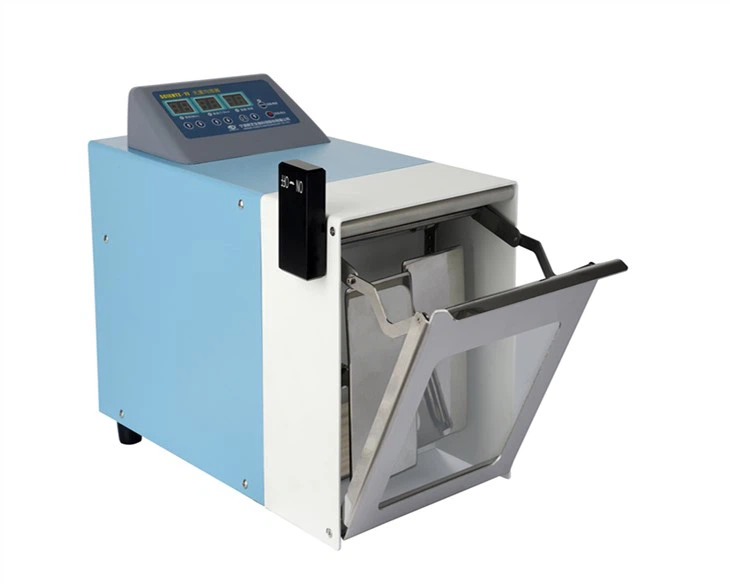
As a lab blender supplier, we are committed to providing our customers with the most suitable products and solutions. If you are considering using a lab blender in a high - altitude area, we would be delighted to discuss your specific requirements. We can help you select the right model, offer maintenance advice, and address any questions you may have.
If you are interested in our lab blenders or have any inquiries regarding high - altitude use, please feel free to contact us for further discussions and procurement details.
References
- Engineering Handbook of High - Altitude Applications. (Publisher unknown). This handbook provides in - depth information on how different industrial and scientific equipment performs at high altitudes.
- Journal of Laboratory Instrumentation. Various issues discussing the impact of environmental conditions on laboratory equipment performance.